A recent study led by Dr. Guiomar Solanas of the Institut de Recerca Sant Joan de Déu and Dr. Salvador Aznar Benitah has revealed insights into how aging affects skin regeneration and inflammation. As skin ages, it becomes less capable of healing wounds and maintaining a protective barrier. A persistent low-grade inflammation is one of the factors contributing to this decline, though the underlying mechanisms remain inadequately understood.
Read More
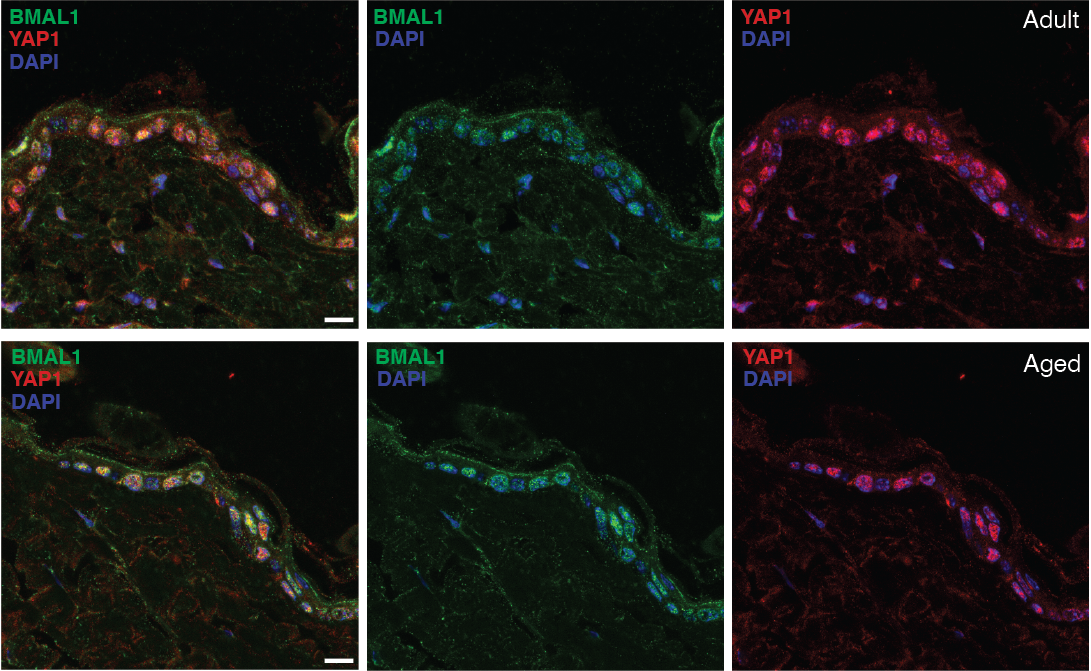
The researchers identified a molecular mechanism wherein two proteins, BMAL1 and YAP, alter their function as skin ages, increasing the activity of inflammatory genes specifically in the epidermis, the skin's outer layer. Their findings were published in the journal Nature Aging. Dr. Aznar Benitah noted that aging prompts a shift in mechanisms that typically maintain skin cell balance, leading to heightened inflammation.
BMAL1, which plays a role in the body's circadian rhythms, and YAP, which helps cells respond to environmental changes, work together in the epidermis, unaffected by daily biological rhythms. In healthy adult skin, their collaboration is essential for maintaining proper skin cell identity and functionality. However, with age, changes in skin stiffness and increased inflammatory signals lead to the accumulation of these proteins in DNA regions that regulate inflammatory genes, heightening their expression.
This study builds upon a previous investigation from the same research group, which identified IL-17 as a key player in skin inflammation associated with aging. In experiments involving mice, temporary blockage of IL-17 demonstrated a reduction in chronic inflammation and a delay in aging features. The new research delves into how epidermal cells react to IL-17, which originates from immune cells in the deeper dermis layer. Specifically, the study shows that IL-17 activates YAP, and blocking IL-17 in aged mice resulted in reduced activity of YAP and related inflammatory genes.
Júlia Bonjoch, the study's lead author, emphasized that they are beginning to understand how epidermal cells respond to inflammatory signals that accelerate aging. The next steps involve investigating whether this inflammatory mechanism can be modulated safely without affecting the crucial functions of the epidermis. The study also included contributions from the Max Planck Institute for Molecular Biomedicine in Germany and was funded by several organizations, including the European Research Council and the Government of Spain.