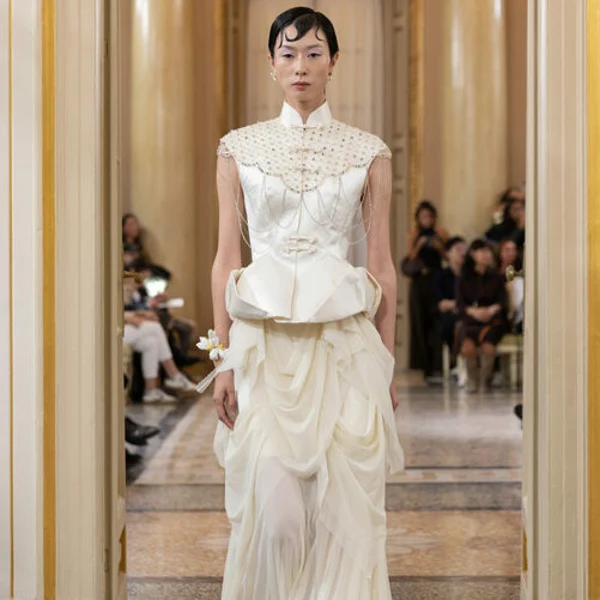
Milan Fashion Week showcased four significant international fashion projects, highlighting contributions from Chinese, North African–Middle Eastern, Brazilian, and Sino–Korean designers: the Keqiao Collective Runway Show, the Oriental Fashion Show, Brazilian Sustainable Fashion, and B Iconic.
Read More
The Keqiao Collective Runway Show, part of the official calendar, marked its third edition, emphasizing the collaboration between Italy and China. This initiative is supported by a three-year agreement with the National Chamber of Italian Fashion, enhancing exchanges in design and culture. The show featured brands such as Gu Yuandai, Liu Hongchao, Sancailiyi, and Sayaanno, who presented Spring–Summer 2027 womenswear that integrates traditional craftsmanship with modern aesthetics.
Gu Yuandai focused on the interplay of past and future, while Liu Hongchao explored knitwear and innovative materials. Sancailiyi drew inspiration from Eastern philosophy, aiming for a balance in womenswear, and Sayaanno's designs examined the relationship between clothing and narrative.
The project also participated in the White fashion fair, where a delegation from Keqiao met with influential figures from Italy's fashion and institutional sectors to celebrate the cooperation that exceeds textile production.
The Oriental Fashion Show, established by Hind Joudar, took place at the Leonardo da Vinci National Museum of Science and Technology. Designers Yoland (Oman), Rena (Morocco), and Gowher Gouvernet (Turkmenistan) presented collections inspired by their rich cultural heritage, emphasizing the influence of the Silk Road on contemporary fashion.
Yoland showcased a modern interpretation of traditional Omani abayas, while Rena's designs offered a unique take on the Moroccan caftan, blending fashion with jewelry. Gowher Gouvernet aimed to preserve Turkmen nomadic traditions through contemporary design, having garnered extensive training in Paris and St. Petersburg.
The Brazilian presence at Milan Fashion Week highlighted sustainable practices with the event 'Brazilian Sustainable Fashion in Milan – Craftsmanship and Culture: The New Luxury.' Held in the Chiostri di San Barnaba, it featured ten female-led Brazilian brands advocating for sustainability. The initiative, supported by the Brazilian Textile and Clothing Industry Association and the Brazilian Trade and Investment Promotion Agency, underscored Brazil's commitment to environmental and social standards in fashion ahead of new EU regulations.
B Iconic, a platform for fashion business and networking, held its third edition at Officine del Volo, enhancing its commercial endeavors through a Pop-up Store and Temporary Showroom. The event emphasized international talent supporting emerging designers and included awards such as the B Iconic Award and B Iconic Emerging Talent Award, celebrating innovative work and contributions to the fashion industry.
Overall, Milan Fashion Week served as a vibrant platform for cultural exchange and innovation in fashion, spotlighting the interplay of tradition and modernity across diverse global influences.