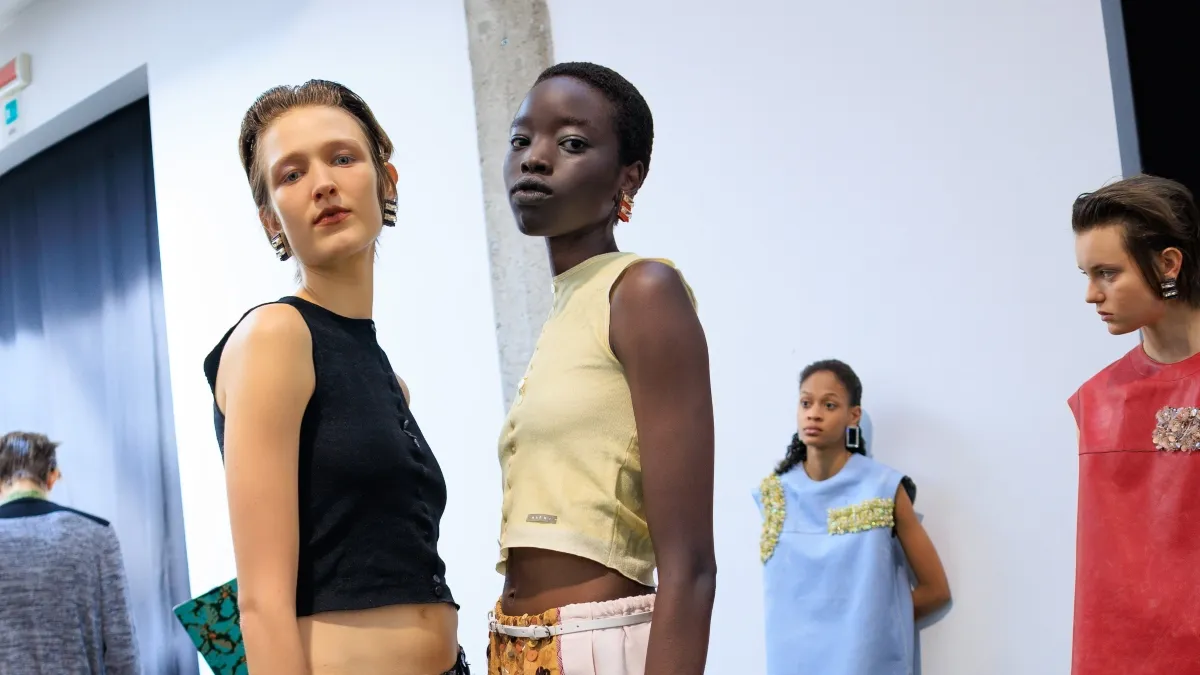
Milan Fashion Week Spring/Summer 2027 was marked by a blend of creativity, celebrity appearances, and intense discourse online. Italian Prime Minister Giorgia Meloni attended the opening gala on Wednesday, celebrating the beginning of the event and the Dalí e la Moda exhibition. This was notable as it was the first time in a decade that a sitting Italian prime minister participated in the festivities, the last being Matteo Renzi in 2016. The presence of Meloni underlined the fashion industry's critical phase, as Italian fashion has experienced an 8% revenue decline since 2023, totaling €91.4 billion for 2026 according to the Camera Nazionale della Moda Italiana (CNMI).
Read More
In her Instagram post about the gala, Meloni emphasized the government's commitment to the fashion sector, which includes a pledge of €100 million to encourage investment. Carlo Capasa, chairman of CNMI, remarked on the significance of the dialogue between government and industry, especially during a time of economic upheaval.
Designers showcased bold, directional collections meant to revive interest and sales in the Italian fashion industry. Gucci’s Demna created an immersive experience by presenting the SS27 show inside a reconstructed store setup within a convention center. The collection’s design highlighted the need for practicality in fashion, featuring pieces intended to resonate with everyday life.
Similarly, Prada debuted with a focused exploration of skirts, showcasing 63 variations ranging from mini to pleated designs, which featured removable panels and unique embellishments. Co-creative director Raf Simons noted the collection reflected a fascination with versatility, allowing wearers to reinterpret each piece.
Moschino's debut by Simone Rizzo and Loris Messina engaged the audience through a show concept that contrasted everyday people with models, emphasizing relatable fashion. This echo of real-life scenarios was also seen in Vogue World, which incorporated familiar Milanese characters into its narrative.
The season was characterized by a shift toward more vibrant, experimental styles. Brooke Bobb from Nordstrom remarked on the move away from “quiet luxury” towards a more alive aesthetic, noting the collections felt more idiosyncratic and less formulaic.
Demna's Gucci collection blended various styles, signaling a clearer direction for the brand after recent challenges. Despite a 2% decline in sales to €1.41 billion for Q2 2026, this performance was less than expected and hints at recovery under his leadership.
Bottega Veneta, under Louise Trotter, moved towards lighter, breezier designs while still emphasizing craftsmanship. Jil Sander's Simone Bellotti continued evolving minimalism with innovative twists on classic pieces. At Diesel, Glenn Martens ended his tenure with an unconventional show that included a scripted flash mob, emphasizing the brand's evolution during his time.
Beyond the runway, Milan is fostering new creative spaces aimed at supporting emerging talent. Former Marni director Francesco Risso opened The Bureau of Imagination to collaborate with external creatives, while Edward Buchanan launched The Situation, a platform for underrepresented designers.
The Sozzani Award was also presented, honoring Timisola Shasanya for her blend of traditional craftsmanship and modern design. This initiative highlights Milan's commitment to nurturing young talent in the fashion industry as it seeks to recover and evolve in a changing global landscape. Carlo Capasa expressed optimism in the potential of Italian fashion to thrive through such creative endeavors.