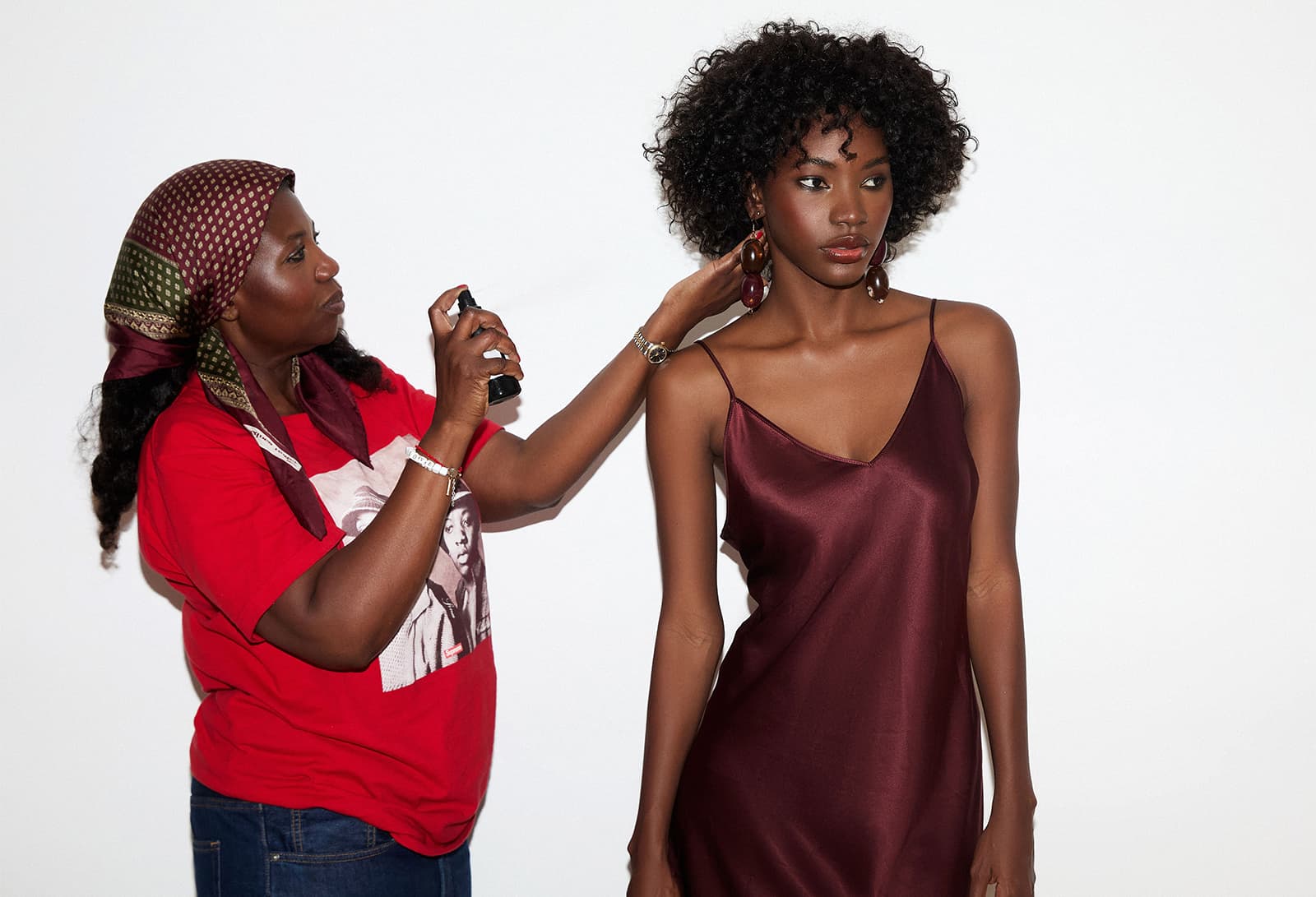
Charlotte Mensah, a prominent figure in the UK’s beauty industry, is marking 40 years since she joined Splinters, London’s first Black hair salon. Known for her Black-owned haircare business, Mensah opened her first salon, Hair Lounge, in 1999 in Kilburn, with a grant from the Prince’s Trust. She later moved the salon to Portobello Road in Notting Hill and launched her haircare line in 2016, featuring the popular Manketti Oil. In 2018, she became the first Black woman inducted into the British Hairdressing Hall of Fame.
Read More
In celebration of this milestone, Mensah hosted the exhibition “Charlotte Mensah: Community Matters” at Ladbroke Hall from September 8-13. Sponsored by Shark Beauty, the exhibition highlighted her journey as both a hairstylist and a businesswoman, while also serving as a reminder of the importance of community in her success.
Mensah’s business philosophy emphasizes restraint over rapid expansion. Despite being in the industry for a decade, she keeps her product offerings limited, currently focusing on one shampoo and one conditioner. She argues that the market is saturated with products that lack loyalty and effective results, stating, “What the world needs is education.” Her brand encourages using existing products for multiple functions to promote sustainability and reduce waste.
Mensah’s products are distributed through various retailers, including SpaceNK, Liberty, and Selfridges in the UK and Dermstore in the US. While a previous expansion into South Africa faced challenges, she continues to see growth in direct-to-consumer sales, which she believes is crucial for the brand’s future. A website overhaul is underway to enhance the shopping experience.
The “Community Matters” exhibit not only commemorated Mensah’s career but examined the systems that enabled her success. Producer Bashiru Lawal-Shardow emphasized the importance of establishing an infrastructure to support future generations. The exhibition's creative team included past clients of Mensah’s, illustrating the interconnectedness of her work and community.
The exhibit featured installations that reflected Mensah’s career and a key installation highlighted the evolution of hairstyling tools. Throughout the week, events included business panels and workshops, further engaging the community.
Mensah expressed concerns about the beauty industry, noting that while access to more products has improved since the 1980s, the training and quality of practice among hairstylists have declined. She advocates for a return to apprenticeship models to ensure that the next generation of stylists receives the proper training and support.