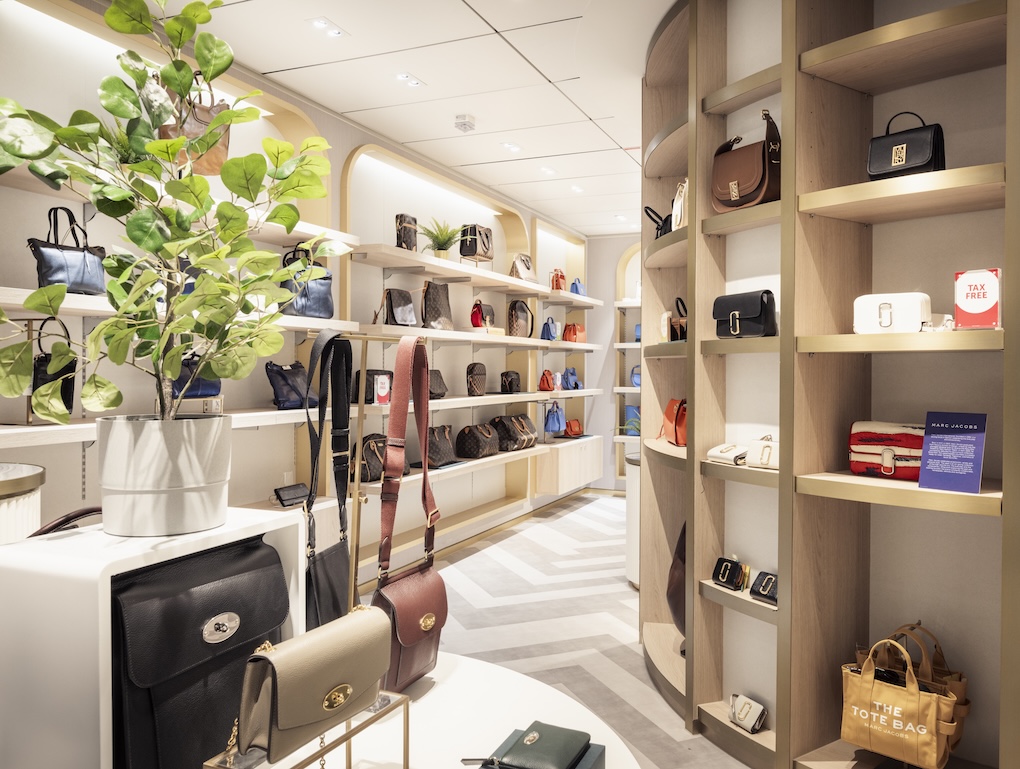
Sophie Scroggs, Accessories Buyer for Harding+, emphasizes that the evolution of luxury at sea focuses on making luxury fashion and accessories more relevant and accessible. In an interview with The Moodie Davitt Report Managing Editor Ameesha Raizada, Scroggs discusses how the experience onboard ships transforms the journey from discovery to purchase.
Read More
Harding+ is shifting from traditional travel retail to a more guest-centric approach, offering curated selections that include established luxury brands as well as emerging designers. In the first half of 2026, Harding+ reported a 36% year-on-year growth in pre-loved items, with brands like Hermès driving this trend. Scroggs notes that guests are increasingly inclined to invest in higher-value pre-loved luxury items, appreciating their stories and value retention over time.
The longer relationship between guests and brands during cruises allows for multiple interactions before a purchase, promoting a confidence-building process essential for first-time luxury buyers. An instance highlighted by Scroggs involved the sale of a Hermès Birkin bag, where guests engaged with a dedicated pre-loved specialist, enriching their purchasing experience through conversations and exploration.
Harding+ aims to tailor its fashion and accessories offerings based on various factors, including guest profile, itinerary, and demographic insights. This segmentation enables Harding+ to develop targeted assortments, ensuring relevance over breadth. For instance, different ships offer unique selections that reflect regional guest preferences and the nature of the cruise.
To remain responsive to fast-changing trends in fashion, Harding+ engages in close dialogue with brands, utilizing guest insights for timely decisions about new products. Scroggs articulates a commitment to innovative retail experiences, highlighting the expansion of their ReLoved line across 42 ships, which now includes a broader range of products such as scarves and dog accessories.
The retailer is exploring open retail environments that facilitate fluid movement between product categories, challenging the traditional standalone luxury boutique model. This approach aims to create engaging opportunities for guests while maintaining the allure of dedicated luxury spaces.
Scroggs concludes by stressing that luxury brands need to understand the unique context of cruise retail, acknowledging the sustained interaction and high expectations of sophisticated guests. Successful brands will leverage cruise as a strategic channel, rather than merely a distribution point.