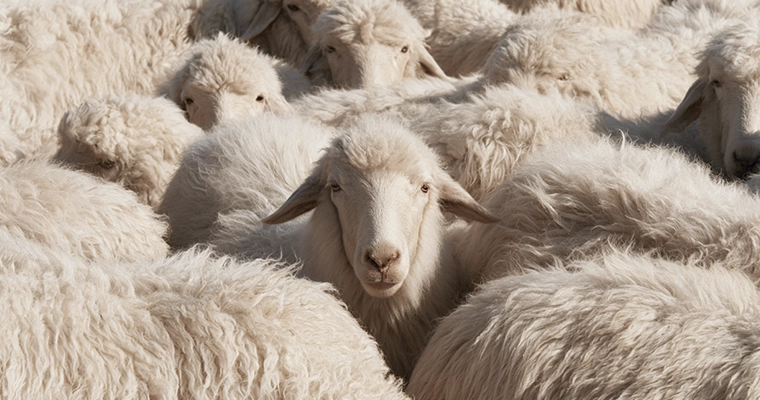
A protest at the COS Spring Summer 2027 fashion show in New York has sparked significant discussion on the use of wool in the industry. On September 13, PETA activists disrupted the runway, holding signs that condemned the treatment of sheep in wool production. The incident gained attention when Steven Kolb, then CEO of the CFDA, intervened physically to restrain the protesters. Following the incident, Kolb apologized, took a leave of absence, and subsequently resigned from his position after 20 years.
Read More
The protest raises a crucial question about the future of wool in fashion. PETA advocates for the cessation of wool use based on animal welfare concerns, highlighting practices such as rough handling of sheep, injuries during shearing, and the controversial practice of mulesing. The organization also challenges the effectiveness of certifications intended to ensure humane treatment during wool production.
While wool is a natural fiber, its status does not negate the ethical issues tied to its production. Eliminating wool from fashion may seem like an environmental solution, yet this could lead to negative consequences, as the demand for clothing persists. An alternative material would be necessary.
According to the Textile Exchange's Materials Market Report 2026, global fiber production reached approximately 139 million tonnes in 2025, with sheep wool contributing about one million tonnes, or 0.7% of the market. In contrast, polyester accounted for 59% of production, amounting to 82.5 million tonnes, with 88% sourced from virgin fossil materials. This indicates that wool represents a minor fraction of the global fiber market.
Despite wool’s relatively small production, it has a noticeable climate impact. Wool farming accounts for a significant portion of greenhouse gas emissions, primarily methane, which was responsible for 53.7% of emissions for a typical wool sweater studied by researchers. This challenges the assumption that natural fibers are inherently more environmentally friendly.
The environmental implications change when considering garment longevity and care. For instance, a well-maintained wool coat worn for decades presents a different environmental equation than a sweater discarded after one season.
While alternative materials like cotton, linen, and man-made fibers exist, synthetic options, particularly polyester, dominate the market. Polyester is derived mainly from fossil resources and does not biodegrade effectively after disposal, posing another environmental challenge.
Moreover, recapturing polyester for reuse remains limited, with only 12% of polyester production being recycled as of 2025. This raises questions about the presumed benefits of moving away from wool without ensuring sustainable alternatives.
PETA's ethical stance remains clear: if society holds that animals should not be sources of clothing, improvements in environmental impact will not assuage those concerns. For brands that continue using wool, enhancing animal welfare standards becomes essential. The Responsible Wool Standard (RWS) exists to establish better practices, requiring third-party certifications that focus on animal welfare and management. Despite a rise in certified wool production, it still constitutes only 4.5% of global greasy wool production, indicating that much of the industry remains unregulated.
The protest's timing underscores a broader challenge, as global fiber production hits record levels. With 139 million tonnes produced in 2025, and the continued increase in fossil-based materials, the fashion industry faces significant sustainability challenges.
Instead of solely debating the existence of wool in fashion, the conversation should shift towards defining the conditions of its use. Questions must be posed regarding which types of wool, the sourcing farms, the welfare standards in place, and the longevity of the garments produced. Sustainable fashion requires a nuanced approach that does not simplify environmental and ethical concerns into binary choices.