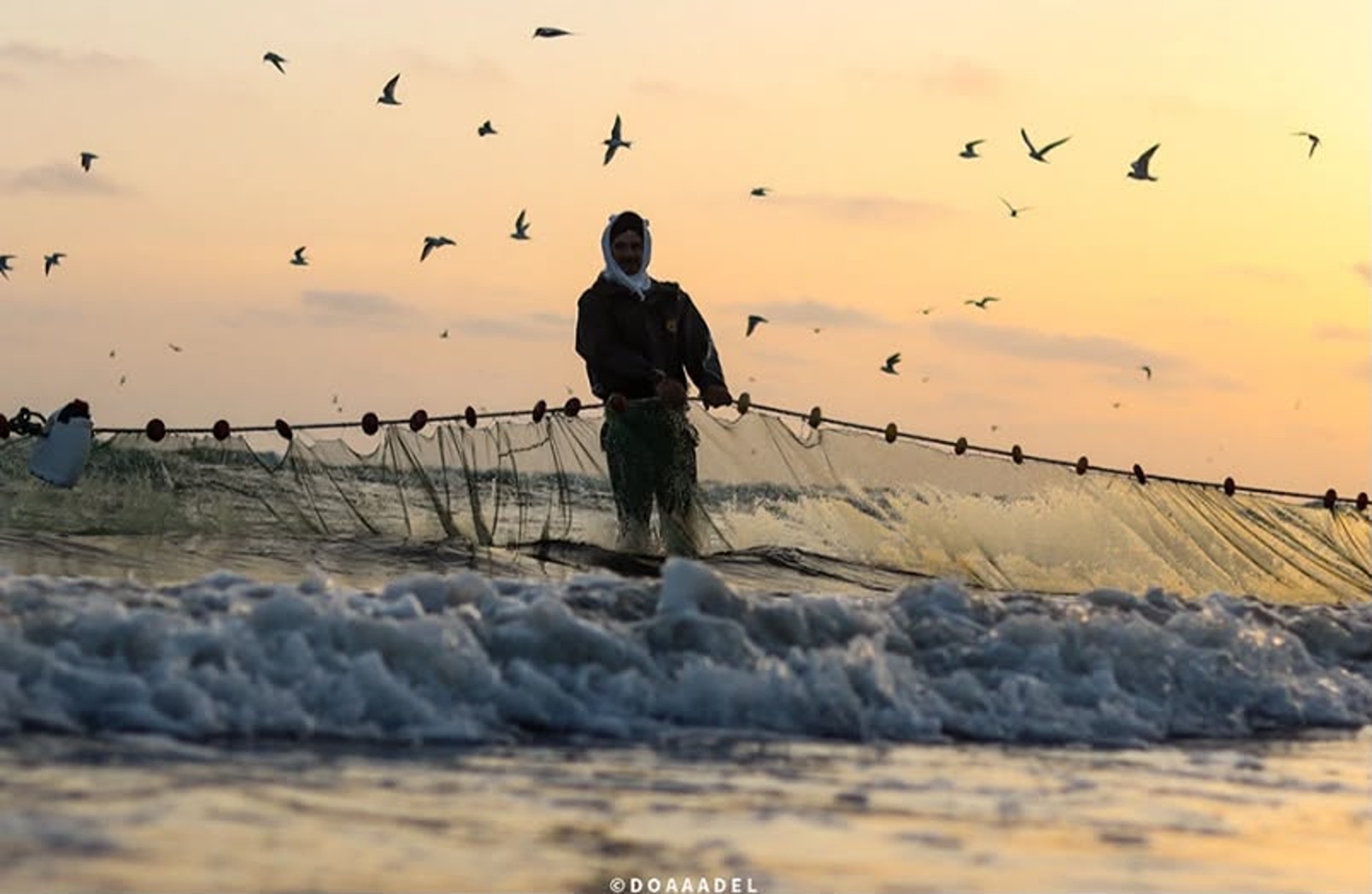
Port Said, Egypt, is home to two prominent industries: fishing and fashion. Though they appear to be distinct realms—one rooted in the Mediterranean waters and the other in garment production—they are intimately linked through the lives of the Port Saidians who rely on both.
Read More
Moemen Sobh, founder of Visenleer, a social enterprise focused on sustainable textiles from ocean waste, embodies this connection. He grew up in a family of both fishermen and fashion designers, which gives him a unique perspective on the interplay between these sectors. Sobh identifies as a fisherman first, saying, “I call myself a fisherman before calling myself an engineer.” His family has a long history in fishing, making the sea a central element of his identity.
Through Sobh's leadership, Visenleer has been working to address the dual challenges of climate change and textile waste. The enterprise aims to utilize discarded fish skin, engaging 1,800 local fisherfolk to transform ocean waste into textile materials. Supported by the Swarovski Foundation’s Creatives for Our Future program, the company has upcycled 60,000 fish skins and diverted 20 tonnes of ocean-bound plastic in preparation for its upcoming fashion collection set to launch in October.
The fishing market in Port Said is a vital part of local culture. With its strategic position by the Mediterranean Sea and the Suez Canal, the city is renowned for its seafood, particularly the bolti fish, which has a unique flavor due to the nutrient-rich waters of Lake Manzala. However, climate change is impacting fish populations and altering fishing conditions, making it increasingly difficult for local fishermen to sustain their livelihoods. Sobh noted a dramatic decrease in fish catches, citing that fishermen could catch only 20 kilograms now, compared to 100 kilograms in 2017. Overfishing and changes in species availability further complicate the situation.
To better understand these challenges, Sobh spent over four months at the Port Said fishing market, engaging directly with fishermen about their experiences. His observations highlighted a gradual decline in familiar fish species and the negative impact of pollution, including oil spills from industries nearby.
The waste produced by the fishing industry is substantial, with more than 10 tons generated weekly. Sobh sees this waste—traditionally viewed as valueless—as a resource for creating sustainable textiles. By treating discarded fish skin as a valuable asset, Visenleer provides fishermen with a new income stream and encourages environmental stewardship.
Sobh aims to turn waste into a resource while promoting better fishing practices among local fishermen. Educational programs are in place to discuss sustainable harvesting methods, advocating for the protection of smaller fish to ensure future abundance.
The transformation of fish skin into fashion involves not just the fishermen but also their families. Fisherwomen help tan the skin at home, connecting the entire community to the new product line. Visenleer's upcoming bag collection, named Arooq, draws from Sobh's personal heritage and pays homage to the port city’s tradition. The designs highlight the unique textures of fish skin, enabling consumers to carry a piece of Port Said's identity with them.