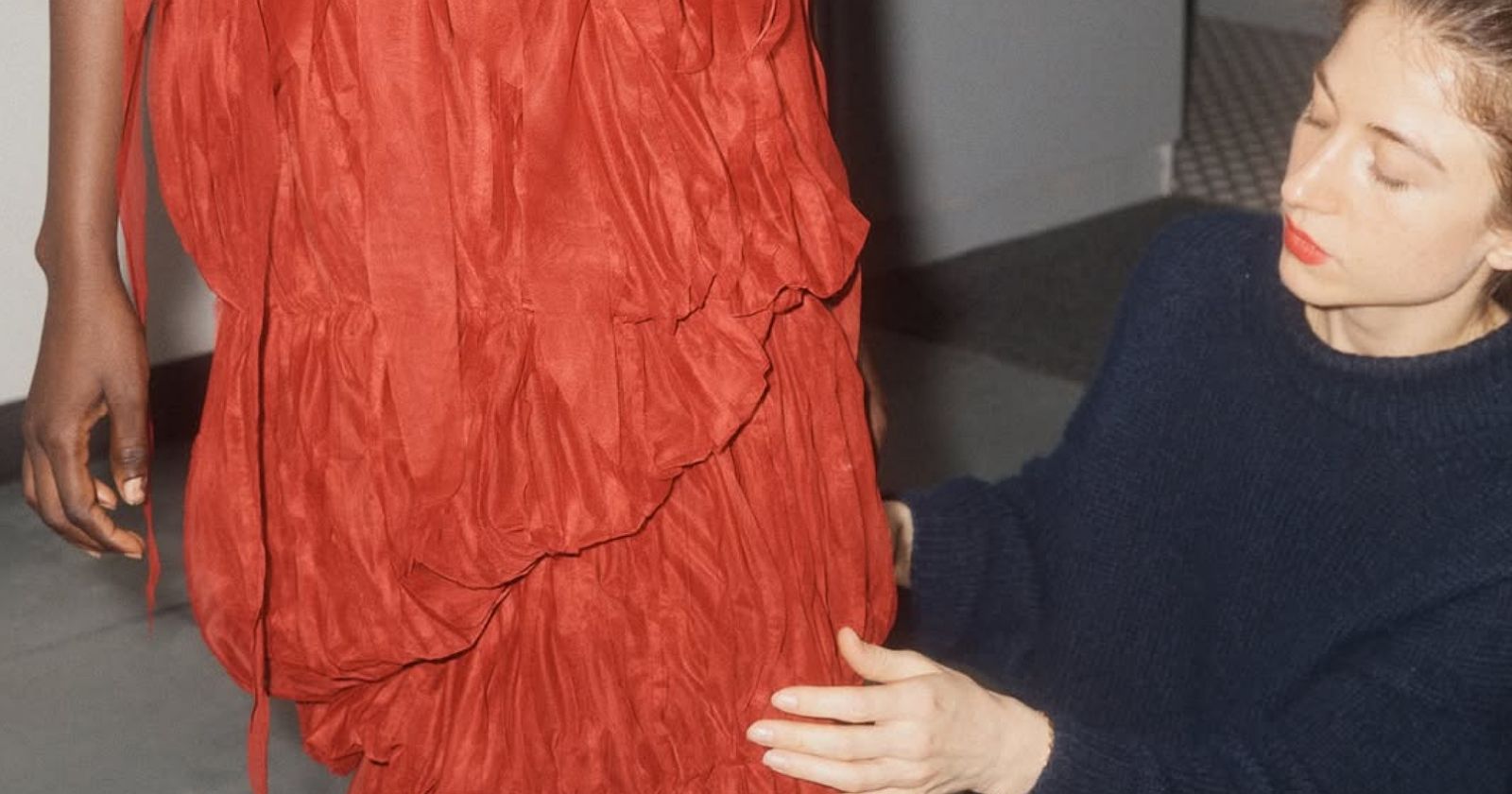
French designer Pauline Dujancourt has rapidly ascended in the fashion world, showcasing her eponymous brand at London Fashion Week. A graduate of Paris’s Duperré school, Dujancourt honed her craft through experience with Alexander Wang in New York and Simone Rocha in London, where she gained expertise in knitwear and production techniques.
Read More
Dujancourt described her journey, emphasizing how Paris instilled in her a meticulous approach to craftsmanship, while London offered creative freedom. After returning to London and working under Rocha, Dujancourt launched her brand following a successful graduate show at Central Saint Martins. Initial recognition came when her SS24 collection was picked up by five Dover Street Market stores, significantly increasing her brand's visibility.
The LVMH Prize marked another crucial turning point in Dujancourt's career, as being a finalist elevated her brand’s profile and expanded her team. She noted the value of communicating her brand's essence in brief encounters, sharpening her focus. Dujancourt's personal connection to knitwear, rooted in her childhood memories with her grandmother, helped shape her unique approach. Although she initially considered knitwear outdated, her experiences challenged this perception, leading her back to the craft during the pandemic.
Dujancourt's collections are inspired by themes of freedom and independence, often reflecting the stories of women and their craft. She collaborates with women artisans in Peru, emphasizing the importance of their skills in creating complex garments. This focus culminated in her "Winnie Can’t Fly" collection, symbolizing the struggle for personal autonomy.
A pivotal moment occurred after her graduation when Dujancourt dreamed of her grandmother, which she believes guided her to finding a budgerigar that revived her spirit. This incident further underscored her commitment to her craft and motivated her brand's direction.
Looking ahead, Dujancourt encourages emerging designers to embrace their uniqueness despite challenges. She remains dedicated to craftsmanship, building a network of knitters across various countries, ensuring that the essence of hand-knit techniques remains integral to her collections.