Investors in the A-share beauty and personal care sector are facing significant challenges, with the index dropping 54% over the past five years and valuations decreasing from 50x to 28x. These troubling figures reflect a broader trend of stagnation and difficulty within the industry.
Read More
After a slight decline in retail sales during the pandemic, the growth rate for cosmetics retail has slowed significantly, although it remains positive. For instance, from January to August 2026, the sector reported consistent month-over-month growth with an average rate of 5.66%. However, listed companies have experienced slower revenue growth and stagnation in net profits, largely due to rising sales expense ratios that have outpaced increases in gross profit margins.
The pandemic has shifted much of the beauty and personal care industry's focus to online sales channels, with many domestic brands positioning themselves as affordable alternatives to international competitors. Despite the increase in gross sales profit margins, net sales profit margins have declined, indicating that market dynamics have changed, and traffic costs have risen.
The core issue driving the decline is a significant drop in the price-to-earnings (PE) ratio from 50.76x five years ago to 28.9x today, which accounts for 43% of the overall decline in market performance. Although individual stocks exhibit a wide range of PE values, with some companies like Proya showing year-on-year net profit increases, the overall market sentiment has depressed valuations across the sector.
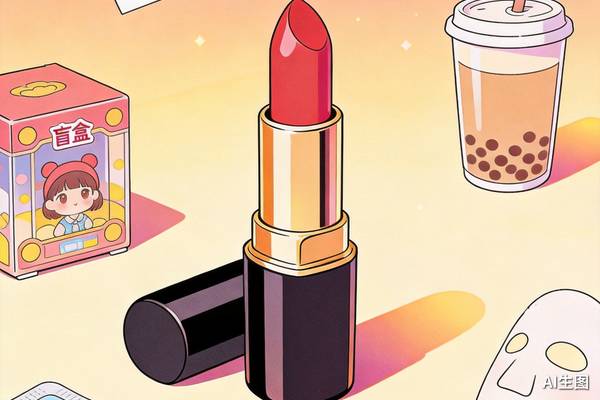
The "lipstick effect", which suggests that sales of inexpensive luxury items like lipstick tend to increase during economic downturns, appears to have weakened in China. Traditionally seen as a sign of economic resilience, recent data shows that cosmetics revenue growth has plateaued, contrary to the expected surge. This may be linked to a decline in the female labor force participation rate, which impacts disposable income and prioritization of spending in uncertain times.
Recent promotional periods revealed a dip in sales across beauty products, indicating a shift in consumer behavior away from makeup toward personal care items. Young consumers are now exploring diverse product categories as emotional compensation, such as skincare, trendy collectibles, and unique consumables.
Looking at Japan's historical context, consumer blue-chip stocks tended to emerge from varied paths, emphasizing either high cost-performance or successful overseas expansions. For the beauty industry in China, there are currently no standout companies excelling primarily through R&D; most depend on marketing and internet-driven sales strategies. Thus, individual investment insights into the beauty sector should focus on companies that are not only navigating these complexities but also innovating in terms of product offerings and market strategies.
In conclusion, while the traditional lipstick effect may be diminishing, avenues for emotional consumption remain, suggesting a potential market evolution rather than an outright decline. Investors and companies must adapt to the changing dynamics of supply and marketing to sustain profitability in the beauty and personal care industry.