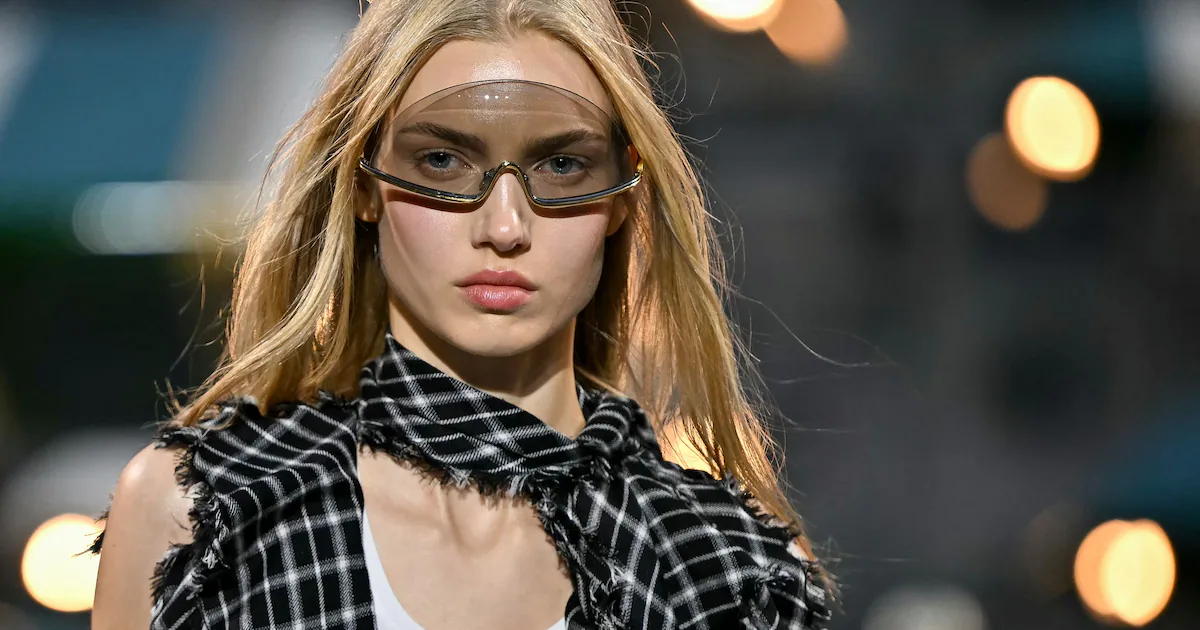
This season's Paris Fashion Week showcased collections that highlighted identity and individuality rather than pure spectacle. Designers presented strong collections characterized by couture craftsmanship, archival references, and a focus on wearability. Notable themes included lightness at Hermès and Dior, romanticism at Elie Saab, and everyday couture at Balenciaga, while abstract individualism was evident at Valentino and Dries Van Noten. Additionally, Schiaparelli offered a practical approach, Saint Laurent embraced unapologetic glamour, and Matieres Fecales used the runway for social commentary.
Read More
Louis Vuitton’s Nicolas Ghesquière embraced futurism in his spring/summer 2027 collection, showcasing fluid, weightless fabrics designed for movement. Following his recent honor from Emmanuel Macron, Ghesquière’s designs included lightweight tails and unique silhouettes, emphasizing freedom and mobility.
At Chanel, Matthieu Blazy centered the collection around the house's historical roots. Key pieces included sheer ivory knits adorned with feather corsages and voluminous tutu skirts that added a playful element. The classic tweed jacket remained fundamental, reinvented in various forms, paired with statement accessories like pearl drops and quilted chain bags.
Loewe’s Jack McCollough and Lazaro Hernandez drew inspiration from both New England and Spanish styles, resulting in eclectic combinations such as backward polos and asymmetrical designs. The intimate presentation at Château de Vincennes allowed for a close-up view of the fabrics and proportions that defined this collection.
Nadège Vanhée’s collection for Hermès featured breathable designs including perforated suede jackets and open-knit dresses, reflecting an overall sense of lightness. Accessories were deliberately understated, complementing the airy themes of the apparel.
Elie Saab sought inspiration from 1930s film icon Jean Harlow, resulting in a romantic collection with soft hues, sheer layers, and delicate floral embellishments, merging nostalgia with modern sensibilities.
Celine’s Michael Rider blended Parisian elegance with casual wear, offering relaxed garments in muted colors and artisanal touches. His designs maintained refinement while integrating everyday comfort, avoiding the over-done nature of some fashion statements.
Balenciaga's Pierpaolo Piccioli explored making couture accessible through everyday clothing items, like transforming T-shirts into gowns to reinterpret classic tailoring techniques. Visible craftsmanship was central to this collection, which emphasized wearability.
At Schiaparelli, Daniel Roseberry presented a collection that balanced sharp tailoring with practicality, showcasing strong monochromatic looks alongside whimsical elements reflecting the brand's drama.
Valentino's Alessandro Michele themed his show around books, celebrating imagination and eccentricity, featuring oversize fits and bold color combinations that addressed personal expression against modern technological influences.
Tom Ford saw Haider Ackermann incorporate swimwear elements with signature tailoring, establishing a daring collection focused on sensuality and available silhouettes. Classic colors were paired with luxurious materials to represent the brand's innate glamour.
Stella McCartney's collection turned ocean themes into wearable art, integrating eco-friendly materials and designs inspired by marine life, while challenging traditional fashion production methods.
Antonin Tron of Balmain reinterpreted mid-century silhouettes using contemporary materials, presenting a collection that celebrated opulent glamour while rooted in the house’s heritage.
Dries Van Noten’s Julian Klausner envisioned everyday glamour, creating layers of unexpected combinations that provide both comfort and an element of surprise to day-to-day dressing.
Maison Margiela’s Glen Martens returned to the brand’s roots, emphasizing contradiction and accessibility in his designs while merging traditional tailoring with innovative details.
Dior’s Jonathan Anderson utilized lightness in fabric, blending air with luxurious materials to create fluid, movement-oriented silhouettes that maintained the brand's technical prowess.
At Saint Laurent, Anthony Vaccarello presented a dazzling collection rich in the brand's history as he signaled a potential farewell, accompanied by an atmospheric performance that connected past and present.
Matieres Fecales made a statement with their politically charged show titled The 99 Per Cent, featuring 99 models of color to highlight themes of social commentary and empowerment.