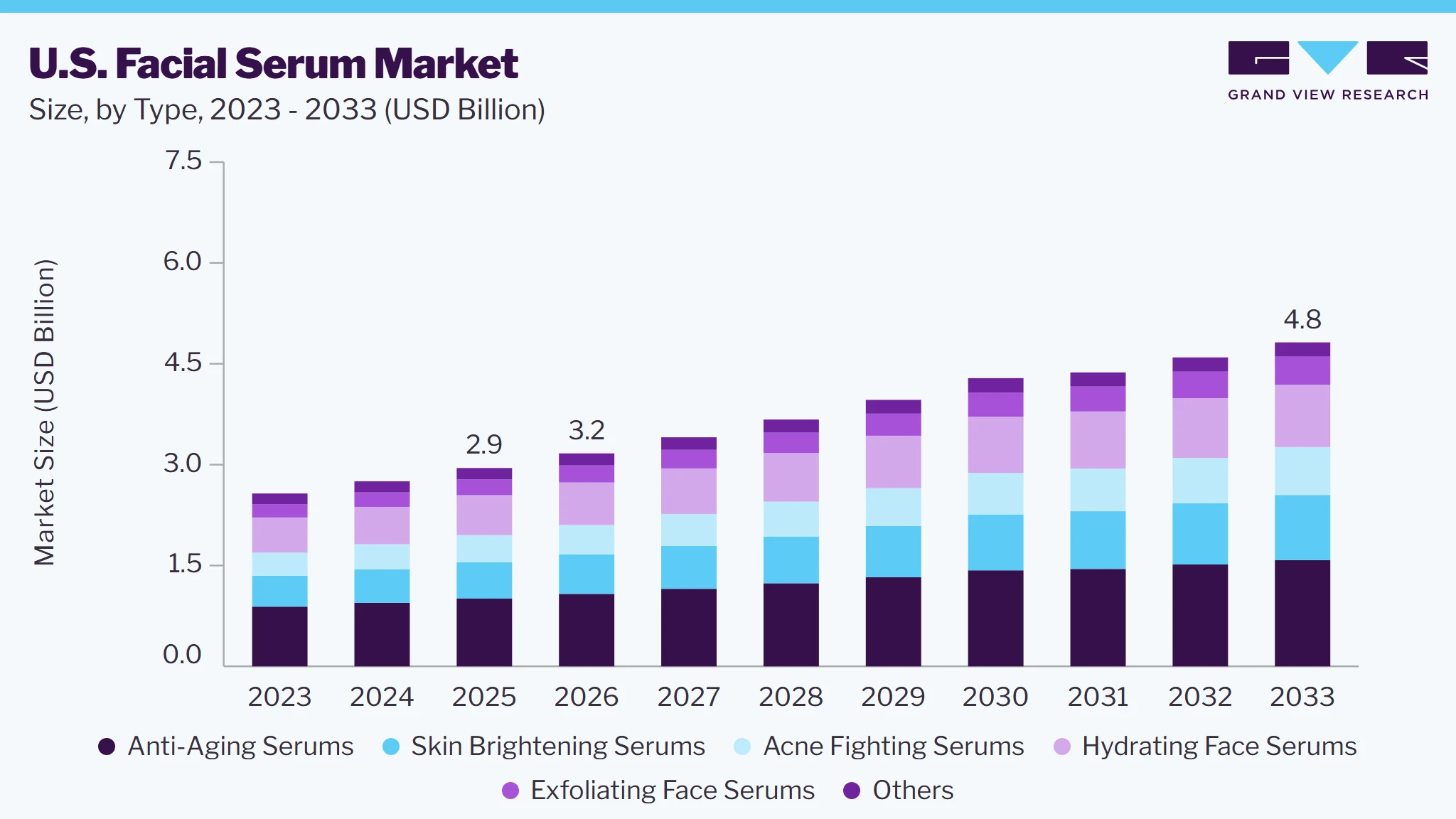
The U.S. facial serum market was valued at approximately $2.9 billion in 2025 and is projected to grow to $3.2 billion in 2026, reaching an estimated $4.8 billion by 2033. This growth represents a compound annual growth rate (CAGR) of 6.2% from 2026 to 2033. Factors contributing to this increase include a rising consumer preference for concentrated skincare solutions targeting issues such as aging, hyperpigmentation, acne, and hydration. The demand for clinically supported products with active ingredients like retinol, vitamin C, hyaluronic acid, peptides, and niacinamide is also a driving force.
Read More
In 2025, anti-aging serums represented the largest revenue share at 34.2%. Skin brightening serums for women accounted for 75.2% of the revenue in that category. The mass-market segment (products priced below $20) dominated with a 45.5% share, while online marketplaces claimed the largest revenue share for acne-fighting serums at 48.5%.
The market is evolving towards formulations that address specific skin concerns with a strong emphasis on visible results. According to a 2026 survey by the American Academy of Dermatology, 50% of U.S. adults worry about premature skin aging, and 43% report significant visible damage, such as wrinkles or dark spots. This has led 73% of adults to engage in practices aimed at preventing premature aging.
Emerging trends in the market show a growing interest in ingredient-led formulations. For instance, peptide-based products are gaining traction due to their effectiveness in promoting skin firmness and health. Products combining multiple benefits, such as hydration and anti-aging properties within single serums, are also becoming more popular.
Social media is playing an increasing role in product discovery among younger consumers. By 2024, 50% of shoppers aged 18-29 indicated they were influenced by social media personalities.
Despite the positive growth prospects, challenges exist, including potential skin irritation caused by high concentrations of active ingredients. Consumers with sensitive skin may shift towards milder formulations, which poses a challenge for brands trying to balance efficacy with tolerability.
The market also sees varying consumer demographics, with women making up 66% of the users, driven by their greater participation in skincare routines. Male consumers, accounting for 34%, are increasingly adopting facial serums, often seeking multifunctional products that address hydration and signs of aging.
Key players in the U.S. facial serum market include companies like L’Oréal S.A., Estée Lauder Companies Inc., Procter & Gamble, Unilever, and Shiseido. These companies are adapting their product offerings to meet the growing demand for targeted and effective skincare solutions.