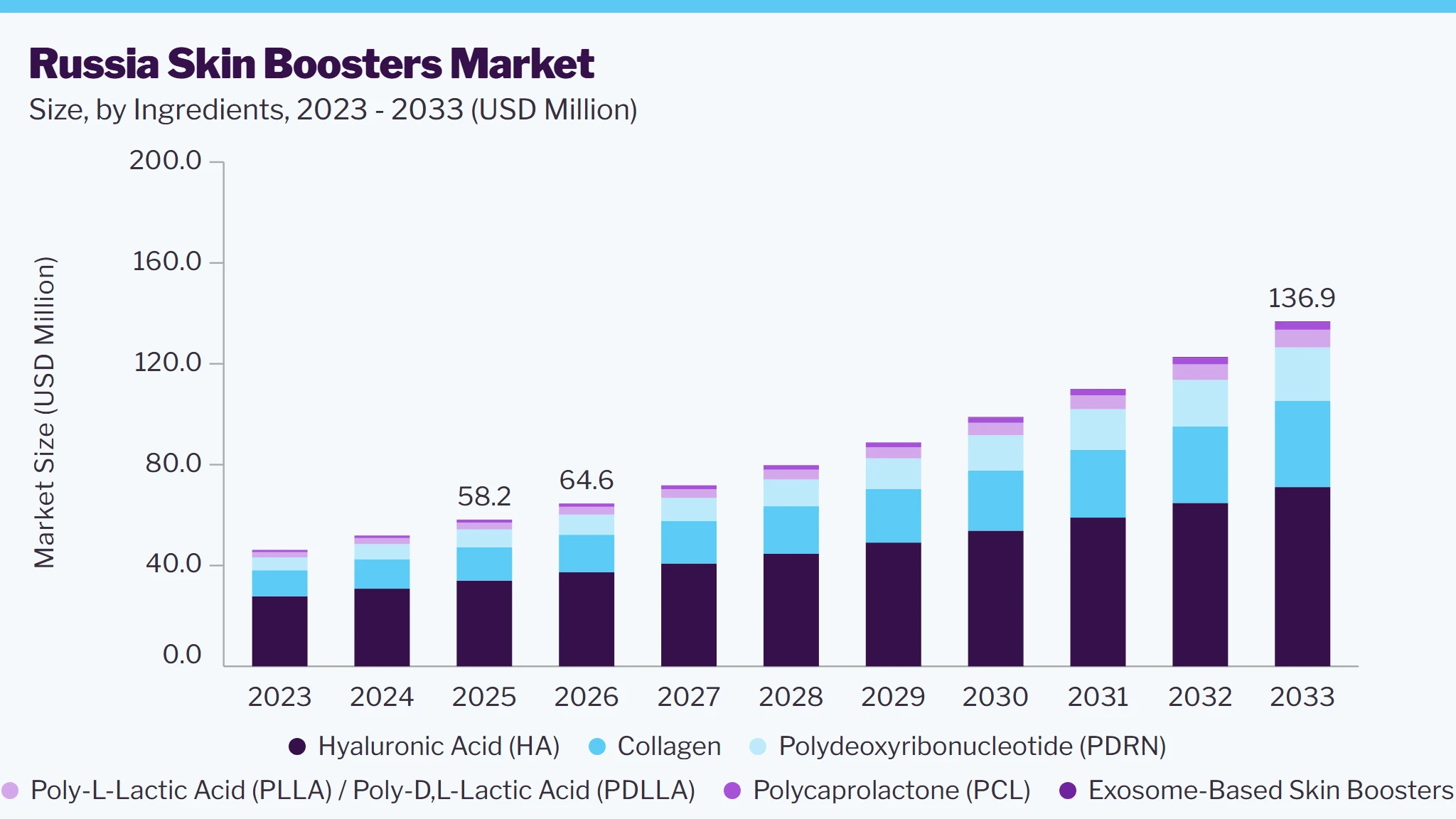
The Russia skin boosters market was valued at approximately USD 58.2 million in 2025, with projections showing growth to USD 64.6 million in 2026 and reaching USD 136.9 million by 2033. This growth translates to a compound annual growth rate (CAGR) of 11.3% from 2026 to 2033. The market expansion is driven by increasing consumer demand for minimally invasive aesthetic treatments focusing on skin quality, hydration, rejuvenation, pigmentation correction, and recovery from procedures.
Read More
In 2025, hyaluronic acid (HA) was the leading ingredient, representing 58.5% of the market share, while the deep hydration and skin quality applications commanded a 46.7% market share. Medical aesthetic centers and MedSpas accounted for 35.2% of the market. The increasing availability of both domestic and imported aesthetic products and the growth of specialized aesthetic practices are contributing factors to the positive market outlook.
Clinical evidence has shown that HA-based treatments effectively improve skin hydration, with studies indicating significant enhancements in texture and tone post-treatment. As demands shift towards targeting specific skin concerns, such as hydration, fine lines, and pigmentation, skin boosters are gaining traction.
Regenerative approaches using ingredients like PDRN, PLLA/PDLLA, PCL, and collagen are also becoming integral as they offer alternatives to traditional HA-based products. A systematic review conducted in 2025 confirmed that biostimulatory treatments yielded improvements in dermal quality and patient satisfaction, although variation in evidence quality exists.
Combination treatments are on the rise, integrating skin boosters with other procedures. Trials demonstrated enhanced results when HA biorevitalization was combined with other therapies, indicating a shift in treatment protocols toward more comprehensive aesthetic solutions.
Key drivers of market growth include the rising consumer interest in non-invasive procedures that improve visible aging signs without volumization effects associated with standard fillers. Interest in nucleotide-based skin boosters has also surged, although clinical validation of these newer products is still developing.
However, challenges remain, notably in product regulation and variability in clinical evidence. The diverse regulatory landscape for injectables can impact market dynamics, especially for emerging technologies such as exosome-based boosters.
The competitive landscape includes both established international firms and local manufacturers. Companies are increasingly focusing on multifunctional formulations that combine hydration with regenerative properties. For instance, Binnopharm Group's injectables experienced a 30% sales increase in 2025, underscoring the rising local market participation.
Recent developments in the industry include Humedix obtaining Russia's first patent for its combined injectable product, and VAIM’s regulatory approval for its flagship Juvelook product, indicating robust growth potential in the aesthetic sector.