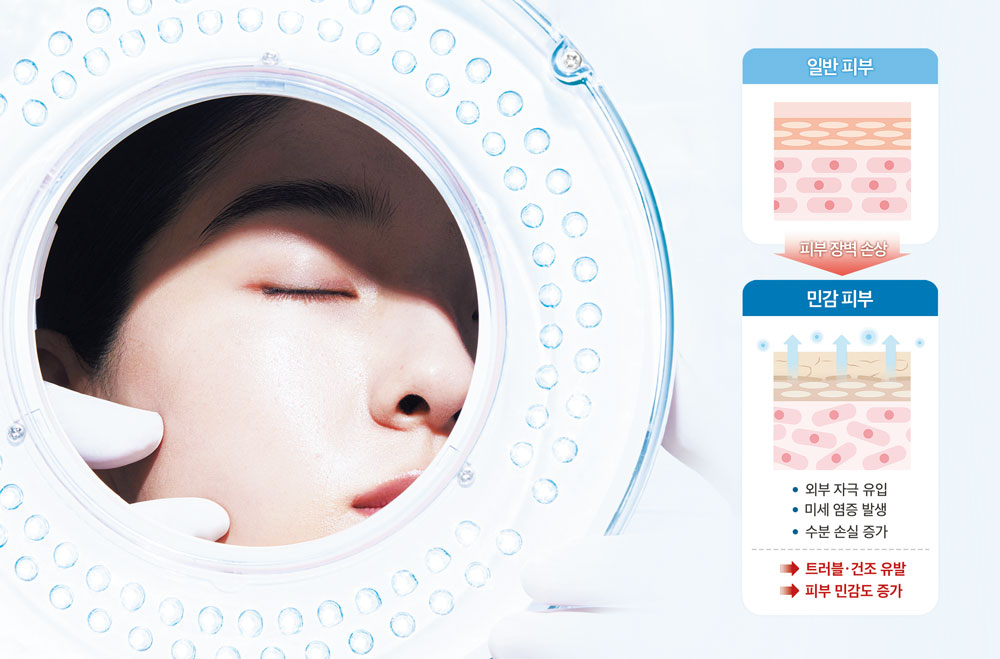
Despite the end of widespread mask-wearing, the number of people experiencing skin sensitivity continues to rise. Many individuals report increased redness during seasonal changes, stinging after switching cosmetics, and recurring skin dryness. Dermatologists emphasize the importance of managing the skin barrier to alleviate these issues.
Read More
The cosmetics industry is increasingly prioritizing skin barrier health, recognizing it as essential for overall skin wellness. As research progresses into barrier-strengthening ingredients, product lines designed to enhance this barrier are expanding rapidly. According to market research firm Grand View Research, 71% of the world's population has experienced symptoms of skin sensitivity, highlighting its prevalence.
Experts attribute the rise in sensitive skin to environmental and lifestyle changes. Factors such as fine dust, UV exposure, and fluctuating indoor climates, compounded by stress and inadequate sleep, have weakened skin defenses. Additionally, habits like excessive exfoliation with acidic products and the use of irritating cosmetics can further damage skin health. Professor Kim Beomjun of Chung-Ang University Hospital noted that the interplay of increased environmental stimuli and changes in lifestyles has affected skin function.
Dermatologists identify impaired barrier function as a common cause of various skin problems. The skin barrier acts as a protective layer that prevents moisture loss and blocks external irritants. This barrier structure is often compared to bricks and mortar, where skin cells serve as bricks and lipids act as mortar. Damage to this barrier can lead to moisture loss and allow irritants to penetrate, causing symptoms like dryness and redness. Research indicates that sensitive skin typically exhibits more gaps in its lipid structure than healthy skin, making it more susceptible to irritants.
Consequently, both dermatology clinics and the cosmetics industry are focusing on restoring the skin barrier. Experts argue that effective skin care goes beyond mere moisturization; it must also strengthen barrier function to maintain skin's protective capabilities. Key components of the skin barrier include ceramides, cholesterol, and fatty acids, and it is vital to keep these elements balanced to achieve optimal skin health.
Amorepacific's AESTURA brand has been at the forefront of research in dermocosmetics for sensitive skin. Founded in 1982, AESTURA has concentrated on developing low-irritation moisturizers, responding to consistent demand in dermatology clinics for effective daily-use products. The brand has grown its focus on research into the skin barrier, realizing that damage to this barrier is a common issue across various skin conditions.
AESTURA collaborates with 62 dermatologists across eight advisory research groups, drawing insights from clinical observations to inform its product development. The Atobarrier line emphasizes restoring the skin barrier and is available in South Korea's major hospitals and clinics, where it has gained trust for effectively supporting skin recovery.
Moreover, AESTURA is expanding internationally, entering markets in North America, Europe, Japan, and Southeast Asia, leveraging its research expertise to address global skin health challenges. Kim Jeonghwan, a researcher at AESTURA, stated that the company aims to enable the skin to restore its healthy barrier function autonomously, viewing sensitive skin not merely as a disorder but as a signal from the skin that requires careful management.
The concept of dermocosmetics—blending dermatology and cosmetic science—has evolved, focusing on low-irritation formulations aimed at resolving skin issues while enhancing the skin barrier. Historically found in hospitals and pharmacies, these products are now gaining popularity among general consumers.
As the demand for skin health solutions rises due to environmental stressors, South Korea's dermocosmetics market is experiencing rapid growth. Euromonitor reports that while the overall skincare market in South Korea grew at an average rate of 2.1% over the last five years, the dermacosmetic segment expanded by 15.7%, signifying a notable industry shift. Industry experts propose that South Korea is becoming a global leader in dermatological technology research, further establishing the significance of science-backed 'K-Derma' products.