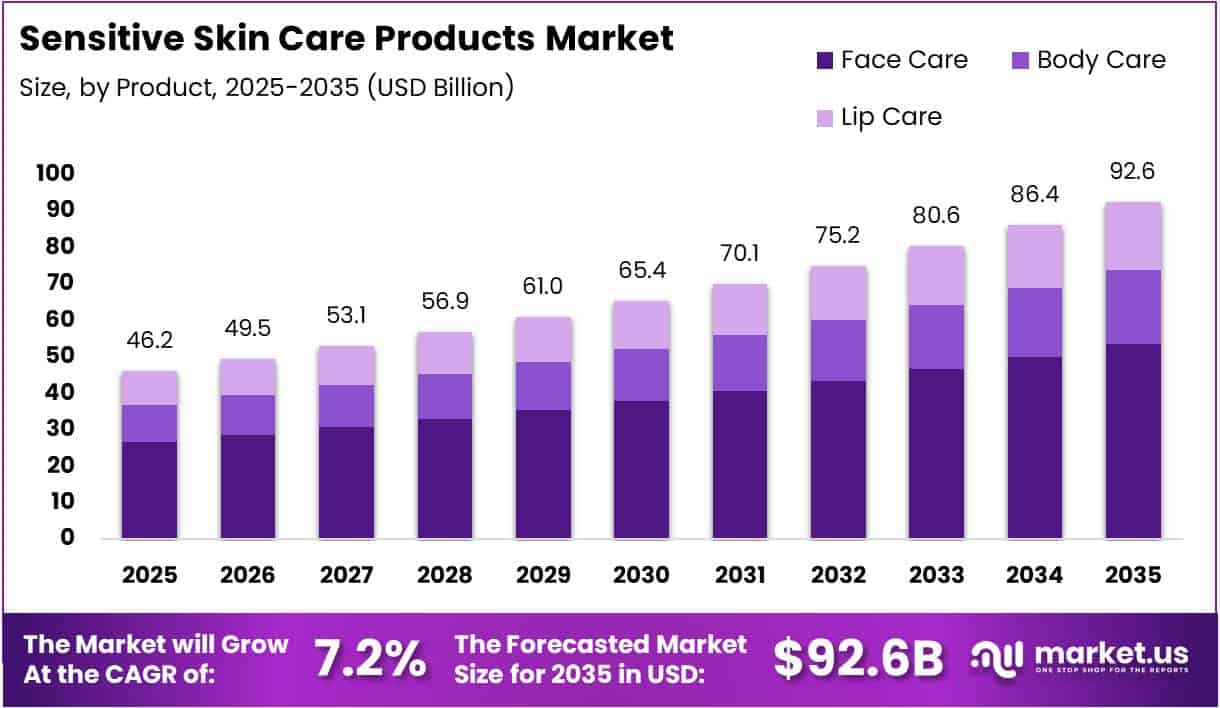
The global Sensitive Skin Care Products Market is projected to grow from USD 46.2 billion in 2025 to approximately USD 92.6 billion by 2035, representing a compound annual growth rate (CAGR) of 7.2% during the forecast period from 2026 to 2035.
Read More
This market encompasses products specifically formulated for individuals with reactive, easily irritated, or allergy-prone skin, including face creams, cleansers, body washes, and lip balms. These formulations are designed to minimize irritation and support the skin’s natural barrier function.
Demand is rising for hypoallergenic, dermatologist-tested, and clean label skincare products, as consumers seek transparency regarding ingredients. This trend is fueling brand reformulations to incorporate gentler, plant-based ingredients, particularly in both developed and emerging markets.
There is significant potential for growth in multifunctional products that offer moisturizing, SPF, and anti-aging benefits in a single formulation. Collaborations between brands, dermatologists, and digital influencers are effective in building consumer trust and expanding into new demographics.
Regulatory standards are tightening globally, particularly in North America, Europe, and Asia Pacific, impacting cosmetic ingredient usage. Manufacturers are responding by prioritizing allergen-free and clinically tested products to meet evolving consumer expectations.
Research indicates that around 60-70% of women and 50-60% of men report some degree of sensitive skin. Furthermore, over 65% of consumers desire beauty products with clean ingredients to alleviate allergies and promote sustainability. A study published in PMC showed that a facial cream for sensitive skin reduced symptom scores by 66% after two weeks and 76% after four weeks of use.
In 2025, the market will see Face Care dominating with a 57.8% share, primarily due to high consumer engagement in facial skincare routines. The Female segment will account for 67.9% of the market, driven by greater reported skin sensitivity. Natural ingredients are set to lead with a 43.7% market share, influenced by consumer preference for plant-based skincare.
Distribution channels will be led by Supermarkets and Hypermarkets with a 38.4% share, owing to convenience and product availability. Regionally, Asia Pacific will lead the market with a 44.80% share, valued at USD 20.6 billion in 2025, fueled by a large consumer base and increasing disposable income.
Key players in the market include L’Oréal S.A., Unilever PLC, The Estée Lauder Companies Inc., and Procter & Gamble Company, focusing on sustainable, effective solutions for sensitive skin.
Recent developments include L’Oréal's increased investment in Galderma Group AG and partnerships aimed at raising awareness for sensitive skin conditions through education and innovative formulations.