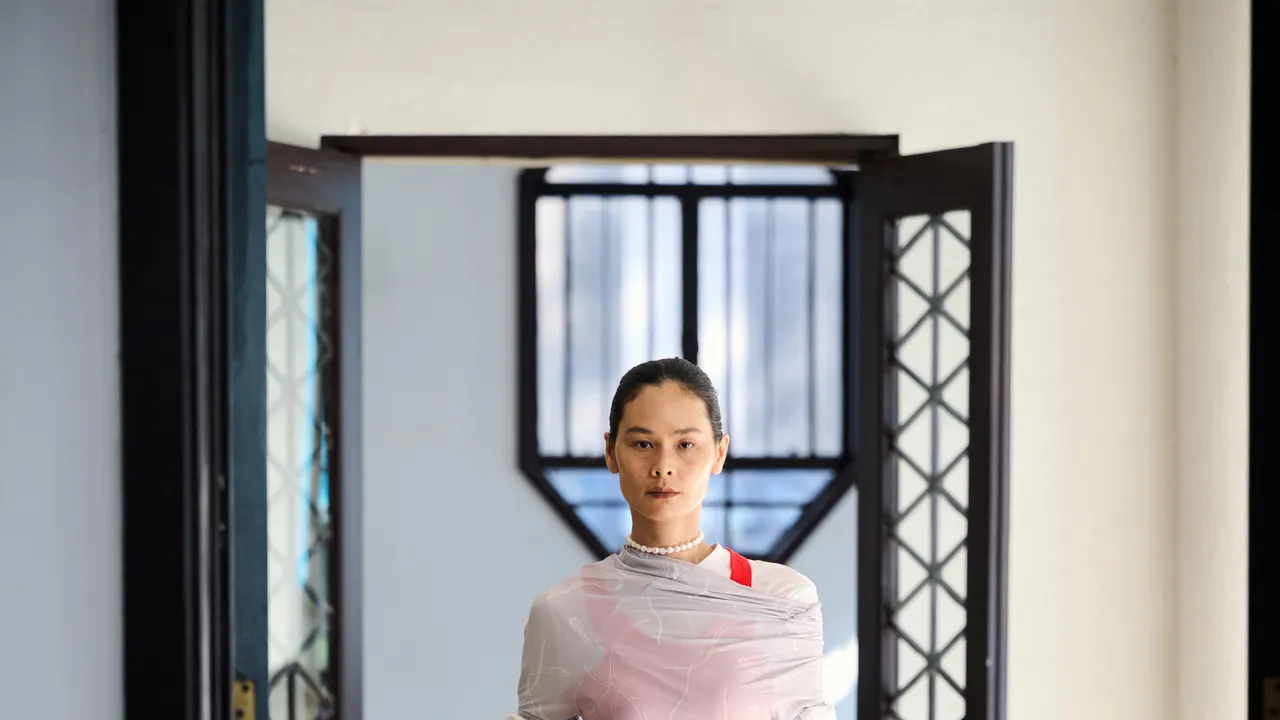
Shanghai Fashion Week is gaining recognition as a significant player in the global fashion scene, showcasing a vibrant community that blends creativity and commercial awareness. As a newcomer to the event, the interconnectedness of designers and consumers stands out, with platforms like Labelhood offering a unique space for both industry insiders and the public to experience new fashion.
Read More
Blake Abbie, editor-in-chief of A Magazine Curated By, emphasizes that Shanghai's designers are in tune with consumer preferences, which fosters a dynamic feedback loop that enriches creativity. Unlike in Europe or New York, where designers may create based on assumptions, Shanghai's designers engage directly with their audience, leading to a more organic relationship between creators and buyers.
Tasha Liu, founder of Labelhood, views Shanghai as a thriving trading hub due to its combination of runway shows, showrooms, and an active digital ecosystem. The city attracts substantial domestic buyers, underscoring its role in the fashion market, even as Paris retains its lead for international orders. The infrastructure developed since 2015 supports this ecosystem by offering platforms for emerging designers, allowing them to showcase collections with less prior experience.
Financial considerations remain crucial, as producing a collection can be costly, and many designers already run retail businesses in China. The local production capabilities and advanced e-commerce channels enable these brands to reach consumers without the need for an extensive international network, allowing for growth through online sales.
Both Liu and Landon Du, SWF Projects Director, note a notable shift toward integrating Chinese craftsmanship and heritage into contemporary designs. This can be seen in the work of designers like Kinyan Lam and Samuel Gui Yang, who blend traditional techniques with modern aesthetics, ensuring that these practices remain relevant and accessible to current consumers.
The evolution of consumer preferences in China shows a growing appreciation for local labels, which has been influenced by established luxury brands. As Chinese consumers become more discerning, they are looking beyond logos to a deeper connection with design identities.
The involvement of Chinese designers in major fashion companies is also increasing, with local talents being integrated into creative teams rather than merely collaborating on temporary projects. Designers such as Feng Chen Wang and Samuel Gui Yang are cited as potential leaders in this space, with their ability to merge craftsmanship with scalability in their work.
Ultimately, the strength of Shanghai's fashion week lies in its supportive community, where designers frequently attend each other's shows. This solidarity fosters a collaborative environment that enhances the growth of the fashion ecosystem. Instead of merely aiming for placement within established Western brands, Shanghai allows its local fashion culture to flourish according to its own distinct identity. The city is establishing itself as a vital location in the global fashion conversation, emphasizing the importance of nurturing local talent and creativity.