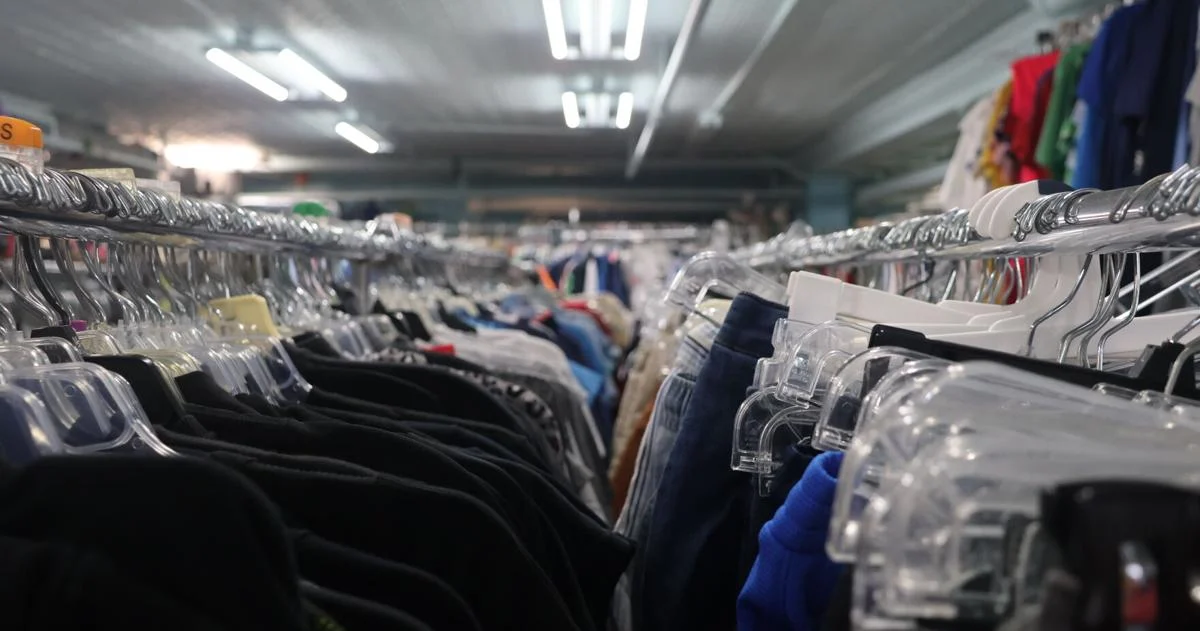
CLARKSBURG, W.Va. — Consignment and thrift shops are providing second-hand clothing options for consumers interested in sustainable fashion. This concept generally involves minimizing environmental and labor impacts during the production process. Katie Jones, an associate professor and program director for fashion design and merchandising at West Virginia University, notes that defining “sustainable fashion” can be challenging, and she encourages her students to think in terms of “less fad fashion.”
Read More
The fashion industry has notable environmental impacts, including dye runoff and the release of harmful chemical finishes into the environment. Production remains labor-intensive, necessitating human workers for tasks like sewing due to the delicate nature of textiles. Jones explains that as fashion production strives to minimize costs, it tends to degrade fabric quality and overlooks environmental consequences.
Concerns over pollution and child labor in the industry have historical roots dating back to the Industrial Revolution. The term “sustainable fashion” gained traction in the 1970s during the back-to-the-land movement. Over the years, the topic has resurfaced, with renewed discussions in the 1990s and more recently due to emerging stories about labor abuses.
Jones points out a market resistance where consumers often hesitate to pay higher prices for sustainably produced items. Additionally, criticism has emerged regarding the fast fashion model, which fosters overconsumption through low-cost, high-volume production.
Despite these challenges, sustainable practices are becoming increasingly popular. Social media, once dominated by “fast fashion” hauls, is now seeing influencers advocate for recycling clothing and second-hand shopping. Jones adds that some shoppers are shifting away from fast fashion by promoting vintage and recycled clothing.
However, she warns that the growth of the second-hand market may also lead to potential overconsumption patterns. The Looking Glass, a consignment shop in downtown Clarksburg, features 7,000 square feet of second-hand items. Co-owner Beth Hoskinson aims to offer high-quality items at lower prices while keeping reusable materials out of landfills.
“There’s so many things that are reusable and sustainable that can be used over and over again, and people just throw them away, and they don’t need to,” Hoskinson stated.
The shop stocks a variety of items, including name-brand and vintage clothing, shoes, and accessories. Hoskinson observes that trends are often driven by social media and pop culture, noting a recent influx of customers influenced by nostalgia, such as trends from the 1970s.
Current popular styles include looser clothing and “whimsy goth” fashion trends. To combat clothing waste, Jones advises consumers to be more selective with their purchases, emphasizing that items tend to last longer when they are genuinely loved. “Loved things last,” she said, encouraging consumers to treat their clothing as more than just disposable items.