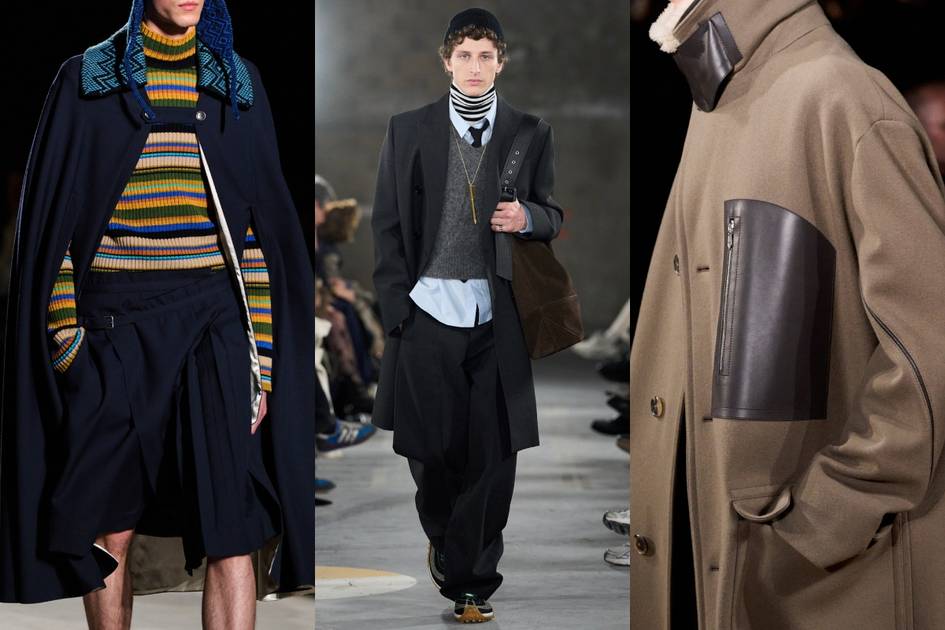
Trend forecaster Edwin van den Hoek observes significant changes in menswear for fall/winter 2027/28, highlighting the emergence of looser silhouettes, innovative material uses, and a blending of traditional gender boundaries. During a discussion at the Eye Film Museum in Amsterdam, he emphasized the growing desire for nature, functionality, and authenticity in fashion.
Read More
Van den Hoek identified four key movements for the season: Elegant, Protected, Secluded, and Creative. He noted that while clients often ask about the upcoming styles and materials, it is vital to understand the cultural and societal developments driving these trends.
Within the ‘Protected’ theme, Van den Hoek remarked on the shift towards larger, voluminous jackets, trousers, and down items that maintain a lightweight feel. He explained that technical materials can achieve a bulky appearance without the associated weight. Accessories are also adapting to this trend, as seen in Dior Men's FW26/27 show, which featured exaggerated volumes and technical outdoor attire.
Innovative methods of fabric construction are emerging, such as fusing materials with heat to create padded structures without traditional stitching, ensuring waterproofing and versatility in design.
In the ‘Secluded’ theme, a reaction to the fast-paced digital era has sparked a desire for peace and nature. This influence is seen in menswear through functional clothing crafted from earthy color palettes, primarily featuring browns, greens, and neutrals, complemented by soft textures like faux fur. Van den Hoek noted a growing interest in natural dyes derived from tea, coffee, corn, and bark, leading to unique color variations. Additionally, prints that mimic fur textures are being utilized, as demonstrated in the FW26 collection by Mordecai.
The ‘Creative’ trend underscores a contemporary take on traditional styles, incorporating layering techniques that combine classic garments in unexpected ways. Van den Hoek observed popular layering strategies, like wearing a turtleneck under a shirt, vest, and jacket, which emphasize layering as a key component of contemporary silhouettes. He noted this trend beyond runways, highlighting how individuals on the street intentionally curate their looks.
Leather is also evolving in FW27/28, transitioning from typical applications to more nuanced roles within garments, such as collars and details, signaling a blend of traditional and modern styles.
A notable shift in gender norms is evident, as designers experiment with traditionally feminine shapes and materials, including skirts and flowing fabrics, in menswear collections. Van den Hoek emphasized that this change is about expanding choices within menswear rather than enforcing new norms.
He pointed out that brands from Asia, particularly Japan, China, Korea, and Taiwan, are leading this exploration, less confined by Western conventions. Noting collections like Black Hole by Comme des Garçons Homme Plus, he cautioned against expecting a swift change towards skirts in mainstream menswear, though he acknowledged a broader acceptance of diverse styles is occurring.
Regarding the overall color palette for FW27/28, Van den Hoek described it as calm, featuring various shades of grey as foundational, used in both clothing and store aesthetics—citing a pilot store by Stone Island in Milan as an example. Alongside warm neutrals, deeper reds and varying greens will complement bold accent colors like fluorescent green, bright blue, and acid yellows. Pink is also becoming more accepted in menswear.
In conclusion, Van den Hoek anticipates a reinterpretation of existing menswear styles for FW27/28, with classic masculinity softening, increased volume and lightness, and a fashionable approach to technical functionality, all while maintaining a striking contrast in color choices.