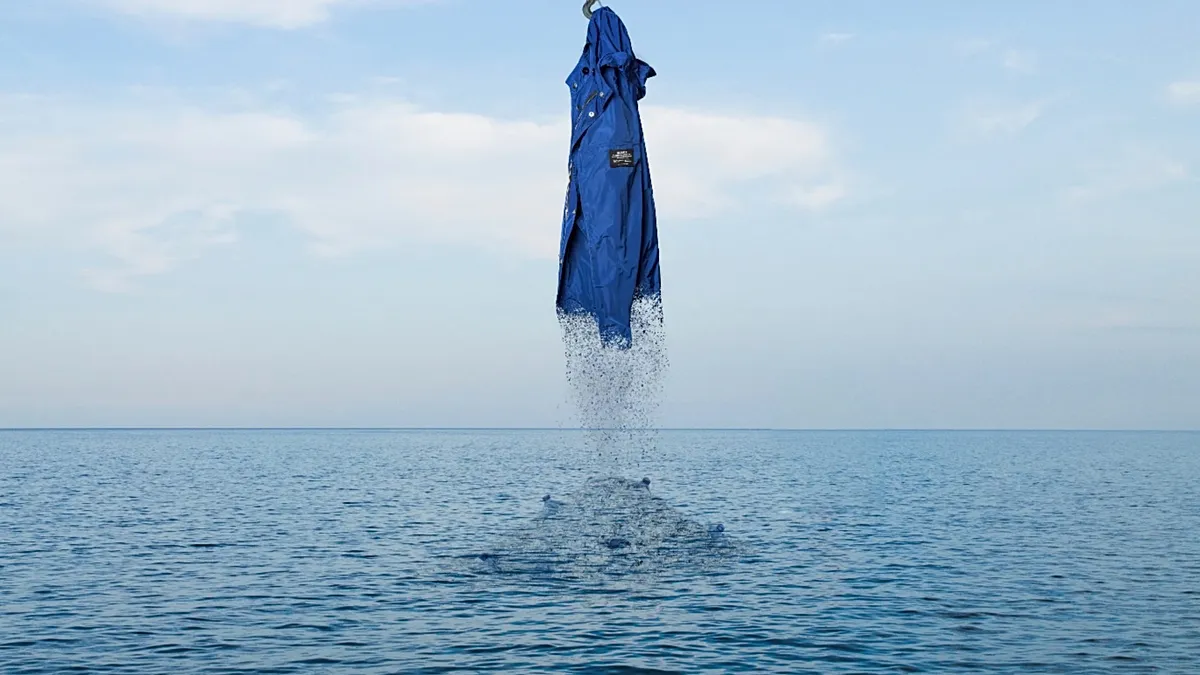
Spanish sustainable fashion brand Ecoalf relies on nearly 5,000 fishermen and a not-for-profit foundation to recover waste from the ocean. Each day, these fishermen collect discarded materials caught in their nets, which are then repurposed into raw materials and fabric by the Ecoalf Foundation.
Read More
Fisherman Tony Beltrán, operating off the coast of Gandía south of Valencia, reported that plastic constitutes about 80% of their daily catch. He noted, “Even before recycling became popular, we were already collecting it; the only difference was that we didn't separate it.”
Since its inception in 2015, the Upcycling the Oceans initiative has successfully retrieved over 2,000 tonnes of marine waste, equivalent to about 100 truckloads. This collaborative effort has now expanded to involve around 80 ports across several countries, including France, Italy, Greece, Egypt, and Thailand. Nonetheless, the scale of the effort is small compared to a persistent problem, as the Foundation states that a truckload of plastic enters the oceans every minute. Andrea Ruzo, director of the Ecoalf Foundation, emphasized the goal of uniting 10,000 fishermen across the Mediterranean to aid in cleaning the sea.
The majority of recovered materials, such as glass and metals, undergo traditional recycling processes. However, approximately 5% consists of plastic bottles, which are converted into what Ecoalf terms Ocean Yarn. Ángela Pérez, Ecoalf’s expert in textile innovation and sustainability, explained, “The first step, once the waste has been collected, is to shred it and turn it into flakes and then pellets, that’s the stage before spinning.”
Ecoalf’s headquarters in Madrid serves as the core of this supply chain, where ocean yarn and various recycled materials are transformed into fabrics. Since its establishment in 2009, the company has sourced materials from a broad range of waste beyond plastic bottles, such as discarded fishing nets and recycled tyres. Their objective is to minimize environmental impacts during the production and design of garments while ensuring quality.
Julie Sohn, Ecoalf’s creative director, stated that circularity impacts every aspect of the design process, allowing garments to be fully disassembled for reuse. Founded with the ambition to demonstrate that the fashion industry can operate sustainably, Ecoalf has grown into a global brand with annual revenues of around €65 million, employing 300 individuals and managing numerous stores worldwide.
Carolina Álvarez-Ossorio, Ecoalf’s chief marketing officer, pointed out the challenge of mass overconsumption and overproduction in recent years, urging brands to implement eco-design principles from the outset rather than relying on sustainable collections or single materials. While there is skepticism about whether sustainable fashion can fully replace fast fashion, Álvarez-Ossorio believes designers play a critical role in crafting purposeful solutions to protect the environment.
Ecoalf exemplifies the circular economy concept, raising the broader question of whether recycling current waste can ever offset the continuous generation of new waste.