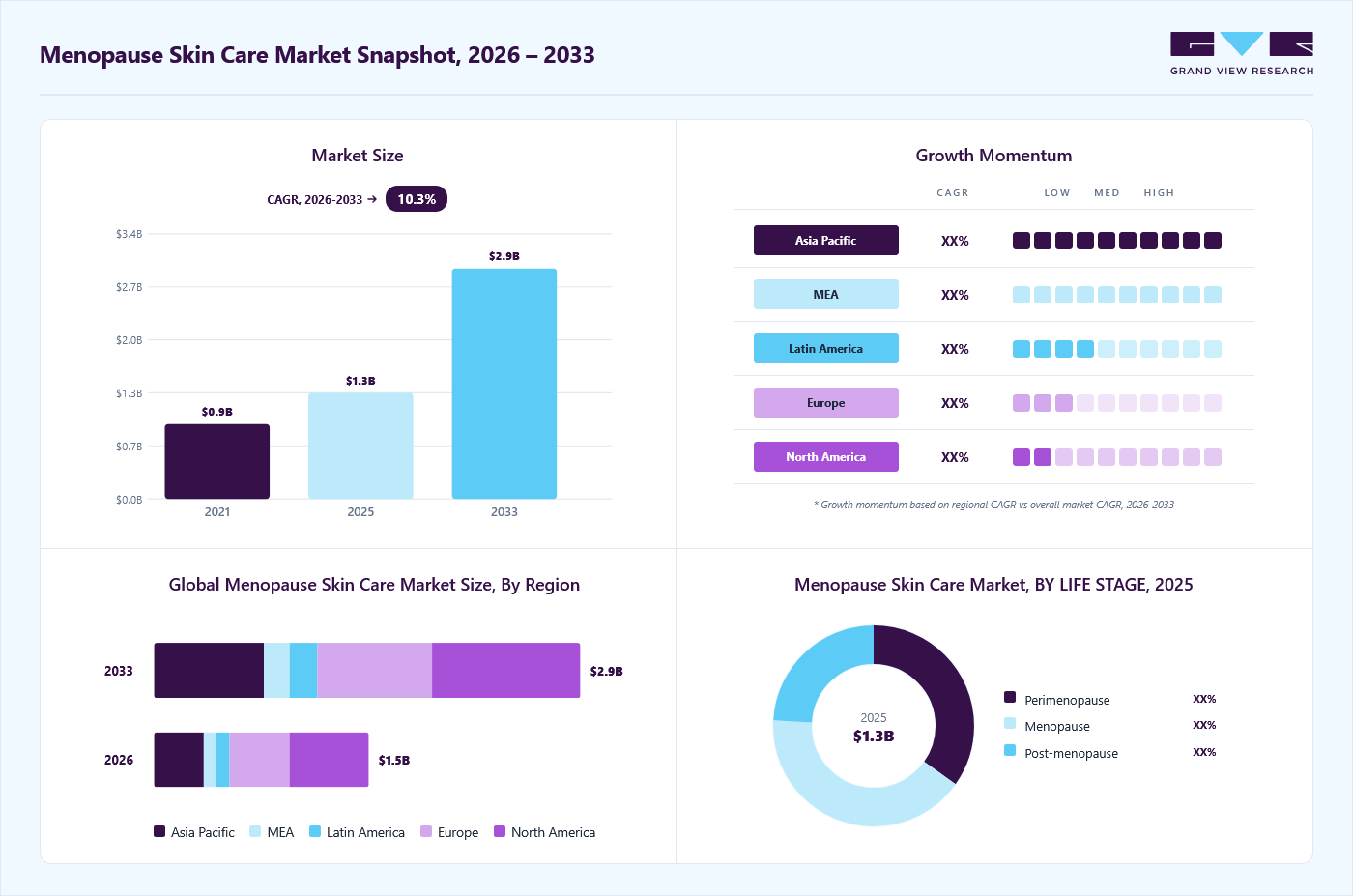
The global menopause skin care market was valued at $1.3 billion in 2025 and is projected to grow to $1.5 billion in 2026, eventually reaching $2.9 billion by 2033. This represents a compound annual growth rate (CAGR) of 10.3% from 2026 to 2033. In 2025, North America led the market with a revenue share of 37.2%, driven by increasing consumer awareness of hormonal skin changes associated with menopause.
Read More
The face skin care segment dominated the market with a 62.8% share in 2025. Additionally, menopause-specific products made up a 41.0% share, while mid-tier offerings accounted for 44.3% of the market. Online sales were prominent, capturing 27.8% of the distribution channel in 2025.
Women are gaining more knowledge about how menopause affects skin issues such as dryness, loss of elasticity, and uneven tone, thus prompting a demand for targeted skincare solutions. A study by Galderma indicated that over 50% of women perceive changes in their skin due to menopause, with many noticing these effects as early as their 40s. More than 30% of women expressed a desire for earlier education on menopause-related skin issues, highlighting the need for proactive skincare solutions.
Innovations in product formulation are crucial in this market, with brands creating products specifically for the biological changes that accompany menopause. Consumers are increasingly seeking clinically tested, sensitive-skin-friendly products that offer hydration and repair without irritation. This shift emphasizes long-term skin health over temporary cosmetic fixes, particularly in response to reduced collagen production linked to declining estrogen levels.
Additionally, there is a growing trend towards multifunctional products that streamline skincare routines by addressing multiple concerns in one formulation. Industry insights suggest that many consumers prefer products labeled for menopause-related issues, favoring fragrance-free and hypoallergenic options as skin sensitivity increases during this phase.
The menopause skin care market sees compelling competition among major companies like L'Oréal, Procter & Gamble, Estée Lauder, Unilever, and Shiseido, along with emerging brands focused on hormone-aware formulations. E-commerce growth is enhancing market accessibility, allowing for broader consumer engagement with menopause-specific products.
In the U.S., which held an 82.5% share of the North American market in 2025, consumers are actively seeking tailored solutions for menopausal skin changes. The Canadian market is also projected to grow at a CAGR of 11.5% from 2026 to 2033, driven by interests in hydration and long-term skin health during menopause.
In Europe, the market represented a revenue share of 28.0% in 2025, with a strong demand for high-quality, age-specific skincare solutions fueled by the aging female population. The Asia Pacific region is forecasted to grow at a CAGR of 12.2%, reflecting rising disposable incomes and a focus on beauty tech innovations.
Recent product launches that cater to menopausal consumers include Sirona's new menopause care range in India and Marcelle's Revival+ Vitality collection, both aimed at addressing skin hydration and elasticity issues related to hormonal shifts.
Overall, the menopause skin care market is evolving quickly, driven by increased awareness of menopause's impact on skin and the growing demand for effective, science-backed formulations.