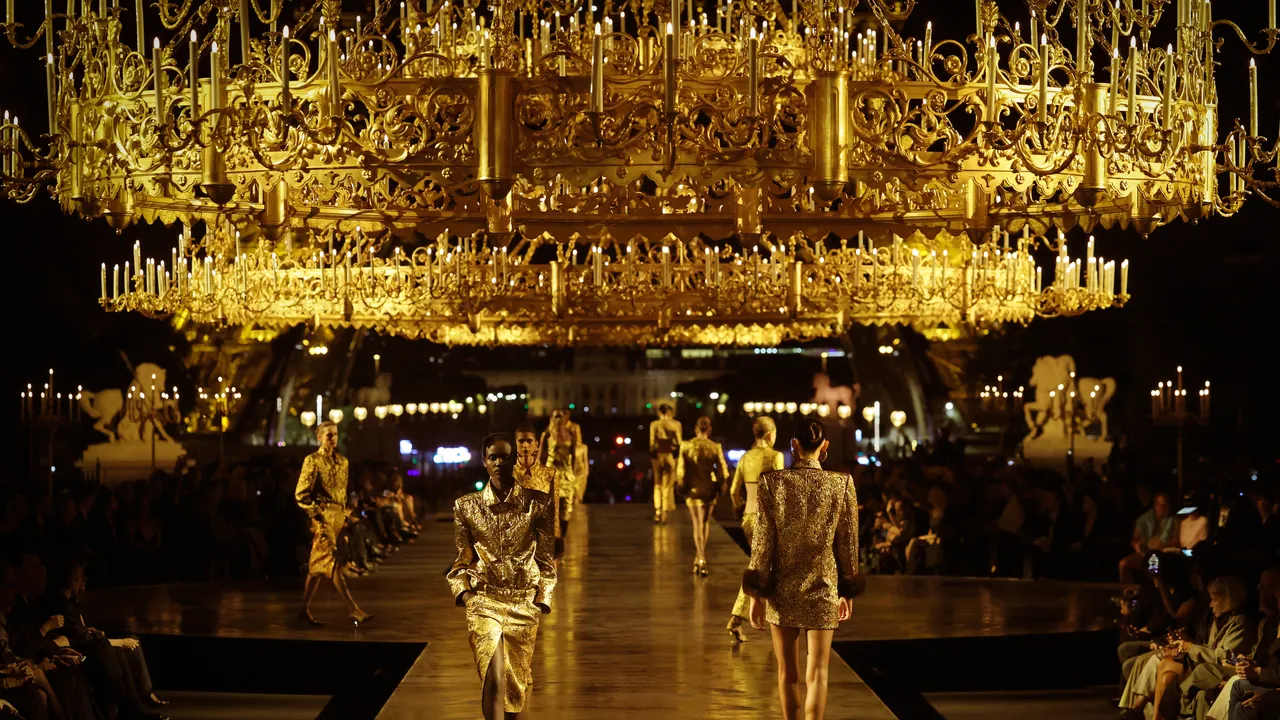
Anthony Vaccarello announced on Friday that he would be leaving his position as creative director of Saint Laurent after ten years. His departure followed a high-profile show during Paris Fashion Week where he reinterpreted the legacy of Yves Saint Laurent in his own distinctive style. The show concluded with a stunning display of gilded ready-to-wear and an evening wear finale that resembled a glamorous funeral march, marking a poignant close to his time at the brand.
Read More
Vaccarello’s tenure has been marked by stability during a period of significant change in the fashion industry. In recent years, numerous luxury brands, including Dior, Chanel, Gucci, and Balenciaga, have seen shifts in their creative leadership. Vaccarello, who joined Saint Laurent in 2016, evolved from an underdog to a prominent figure in fashion, known for his sleek designs and focused vision. His approach drew from the heritage of the brand while maintaining a relevant connection to contemporary aesthetics.
Over the last five years, his collections prominently featured references to Saint Laurent’s iconic pieces, such as the tuxedo jacket and safari jacket, while also exploring less celebrated aspects of his legacy. Despite his narrow focus, Vaccarello succeeded in making the brand's history resonate with a new generation.
In the wake of his departure, new designers also grappled with their relationships to fashion legacies at this season's Paris Fashion Week. Miguel Castro Freitas, recently appointed at Mugler, focused on reviving Manfred Thierry Mugler’s aesthetic but showed signs of struggle without clear direction. Jonathan Anderson at Dior opted for a lighter presentation, balancing elements of excess with a clearer vision. Meanwhile, Antonin Tron at Balmain embraced ostentatiousness, although he struggled to define the brand's distinct identity amidst influences from previous leadership.
Matthieu Blazy at Chanel aimed to recontextualize the founder Gabrielle ‘Coco’ Chanel’s story by delving into various aspects of her life, moving beyond the typical sartorial references associated with the brand. He achieved a stimulating collection that maintained a connection to Chanel’s core principles while allowing for creative innovation.
As Vaccarello prepares to leave, his successes serve as a study for upcoming designers navigating the complex interplay of legacy and contemporary fashion.