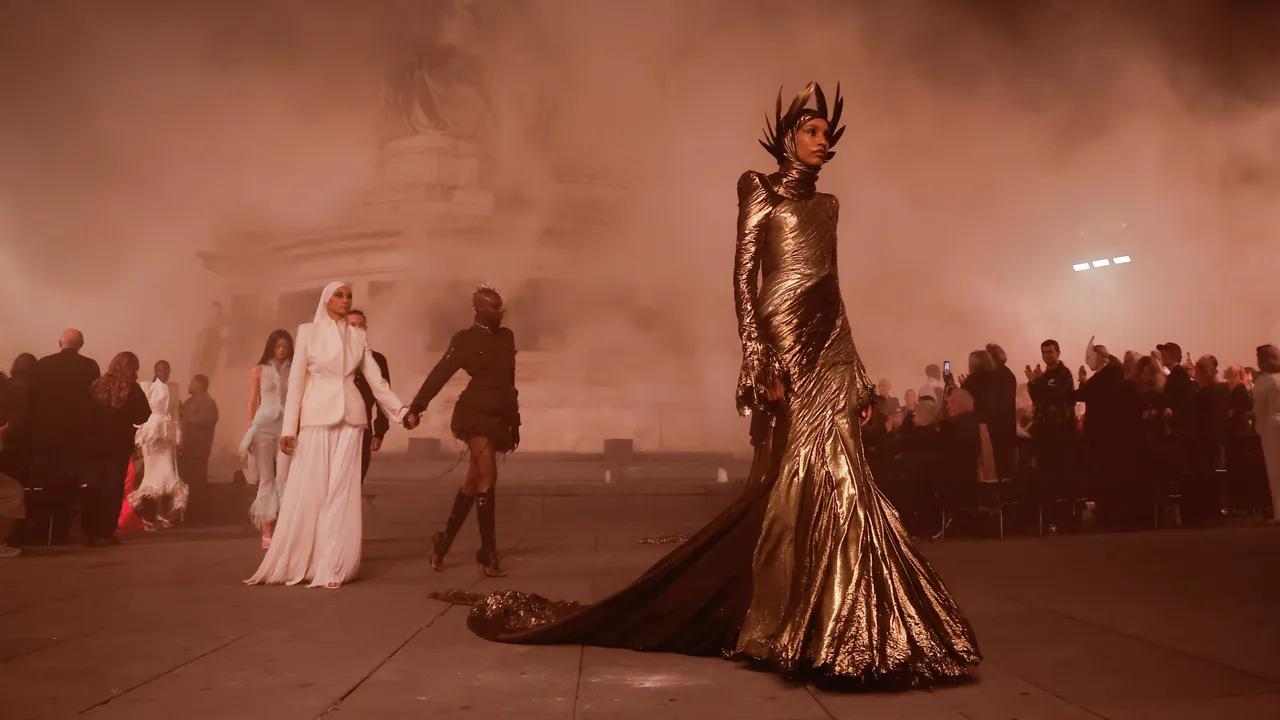
Paris Fashion Week (PFW) traditionally showcases established brands like Dior and Chanel, but this season saw a shift as emerging brand Matières Fécales captured the spotlight. Founded by Montreal club kids Steven Raj Bhaskaran and Hannah Rose Dalton, the brand made headlines with a politically charged show featuring Rihanna at Place de la République. Their collection addressed wealth disparity, combining striking couture pieces inspired by Alexander McQueen with provocative imagery.
Read More
The show quickly became the talk of the town, challenging the usual narrative of who gets to define fashion's elite. Critics noted a paradox in the show’s political messaging while celebrities attended in high fashion. Miles Greenberg, an artist who walked in the show, emphasized the group's authenticity and sincerity in their presentation, contrasting it with the safe and commercial focus of larger brands.
Another standout moment came from Vaquera, where designers Bryn Taubensee and Patric Dicaprio closed their show with a rendition of "I Got You Babe." While they humorously acknowledged past attempts to commercialize their designs, they returned to their signature eccentric style. This season's collection included dramatic gowns and playful character work, reflecting the duo's evolution while remaining true to their roots.
At August Barron’s presentation, held at the historic La Cigale venue, models strutted in outfits inspired by cabaret aesthetics. The show combined entertainment with compelling fashion pieces, gaining acclaim for its engaging experience. Fashion director Chloe King remarked on the authenticity of smaller independent brands capturing attention amidst the grace-focused atmosphere of larger shows.
This PFW season highlighted a tension between commercialism and artistic expression, with many notable presentations leaning towards subversion and genuine expression. Designers like Rick Owens, who celebrated the avant-garde, resonated with audiences seeking emotional connection over spectacle.
Overall, the week demonstrated a notable interest in independent talents and their unfiltered narratives, marking a departure from the expectations of mainstream fashion and indicating a renewed interest in the avant-garde and the “freaks” of the industry.