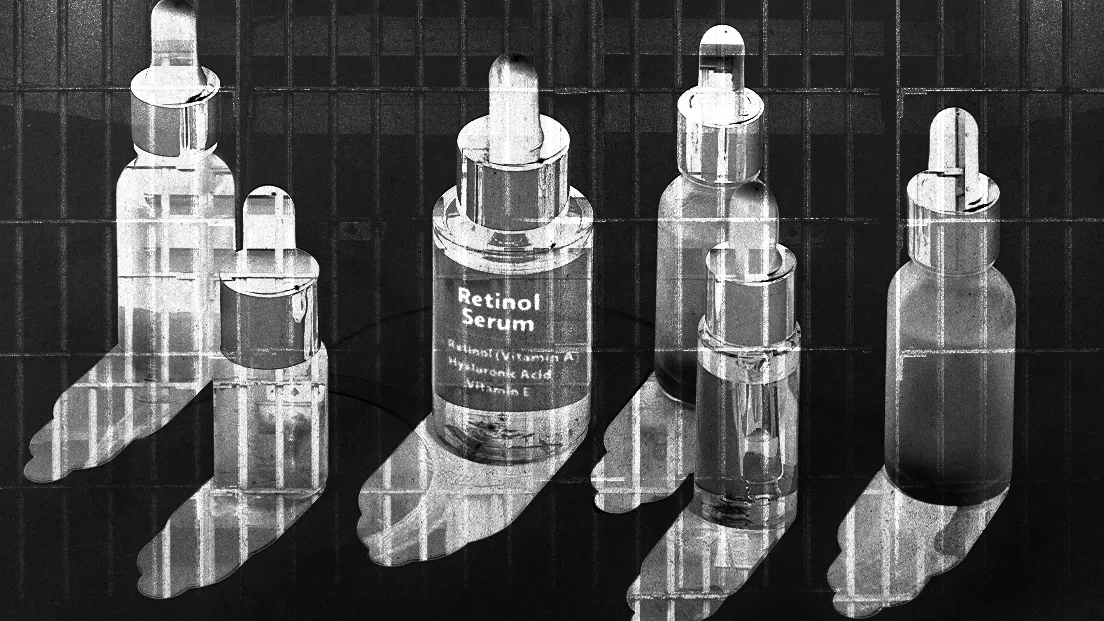
In 2014, Teen Vogue celebrated retinol, an organic compound derived from vitamin A, which gained popularity as a skin-care staple. By then, retinol was recognized for being gentler on the skin compared to other retinoids. Tretinoin, a stronger, prescription-only variant also known as Retin-A, had a longer and more troubling history of use involving unethical medical practices.
Read More
Before the FDA approved Retin-A in 1971, it underwent testing on hundreds of incarcerated individuals in Philadelphia under the direction of dermatologist Albert Kligman. Between 1951 and 1974, Dr. Kligman and his team conducted experiments primarily on Black inmates at the now-closed Holmesburg Prison, aiming to develop pharmaceuticals and cosmetics, as well as chemical warfare agents. The male subjects were subjected to harmful “patch tests,” biopsies, injections, and other painful procedures. One former participant recounted receiving a needle in his spine for $7, which, adjusted for inflation, would be about $54 today.
Participants often faced lasting damage, including scarring and skin discoloration. In addition to men, women incarcerated at Holmesburg were also tested for menstrual products, indicating a pattern of exploitation and lack of informed consent. Dr. Kligman’s team incentivized participation with financial rewards while often failing to disclose specific risks associated with the experiments. Many subjects were illiterate and did not fully understand what they were signing.
The vitamin A trials led to Dr. Kligman’s pivotal discovery of tretinoin’s benefits for acne and wrinkles. Though vitamin A's potential was known since the 1940s, earlier studies had halted due to irritation symptoms. Dr. Kligman proceeded with high doses without regard for the pain caused, asserting that he had to push limits to achieve results.
Testing at Holmesburg was not limited to skincare; Dr. Kligman worked with major pharmaceutical companies and the U.S. Army, exposing subjects to hazardous substances, including chemicals linked to Agent Orange. His experiments persisted until 1974, with Kligman achieving immense success and minimal accountability despite numerous legal challenges from survivors.
A significant public reckoning began in 1998 with the publication of Allen M. Hornblum's book, *Acres of Skin*, which detailed the abuses at Holmesburg. Although Kligman passed away in 2010, he remained unrepentant about his actions. In 2000, nearly 300 survivors launched a lawsuit against him and others, which was ultimately dismissed due to the statute of limitations.
In recent years, institutions that benefited from Kligman's work began acknowledging his legacy. In 2021, a University of Pennsylvania dermatologist called for an end to the university's association with Kligman and for reparations for his victims. Following a public petition, the university formally apologized in 2022 and removed Kligman’s name from various honors, while the City of Philadelphia issued its own apology. In 2023, the College of Physicians rescinded an award previously given to Kligman and apologized to survivors.
Despite these apologies, survivors and their advocates continue to call for justice in the form of financial reparations, emphasizing that the profits generated from Kligman’s work have not been shared with those who endured suffering for the sake of scientific progress. "We are talking billions of dollars — and my daddy’s skin is in those jars,” stated Adrianne Jones-Alston, reflecting the ongoing demand for restorative justice.